Due to heavy rain in the forecast, tonight’s High Line Tour: From Freight to Flowers has been canceled. We look forward to seeing you on a future tour!


your inbox
Sign up for the High Line newsletter for the latest updates, stories, events & more.
Rooted in Pride
June 1, 2026
When New York’s LGBTQ+ community first began to migrate north from Greenwich Village in the 1970s to the neighborhoods surrounding the High Line, the occasional freight train would still rumble overhead. As the High Line fell into disuse and disrepair, the rattle of the railroad was replaced by the disco beats pulsing from the nightclubs reinvigorating the neighborhood. It was the soundtrack of a movement—for liberation and equality, and for what would become a powerful force of organized activism. By the dawn of the new millennium, when the High Line had been condemned for demolition, it was the local LGBTQ+ community who knew how to rally to its rescue.
That’s why our annual Pride celebration is always one of the most important moments on the High Line, and why this year, we’re returning to these roots. From transforming the Spur into a family-friendly piano bar, to a dance party rooted in the historical Black and Brown LGBTQ+ experience, for 2026, we have reimagined Pride as a tribute to the unique and important role of music, dance, and nightlife in the advancement of LGBTQ+ rights and equality—and how the High Line continues to be a welcoming space for the celebration of LGBTQ+ community and culture for current and future generations.
“The High Line has a long legacy of connection to the LGBTQ+ community, from the park’s earliest supporters to the neighborhoods that surround it,” says Alan van Capelle, Executive Director of Friends of the High Line. “At this moment, when people are actively working to erase our stories and to strip away the rights we fought so hard to win, the High Line is utilizing our public spaces for joyful, inclusive gatherings, where people can come together and celebrate identity and build community. After all, joy is the ultimate act of Resistance.”
Dancing in defiance
Threading through the iconic neighborhoods of Hell’s Kitchen, Chelsea, and the Meatpacking District, the High Line has always been intricately interwoven into the history of the LGBTQ+ experience in New York, and the vibrant tapestry of queer culture, nightlife, activism, and belonging that the LGBTQ+ community has built over the decades on Manhattan’s West Side.
During its years as a derelict industrial relic, the High Line had loomed as a ghostly skeleton of urban decay over a community enduring the ravages of the AIDS crisis. As the community began to recover and emerge from the devastation of AIDS, the High Line was reviving itself as an urban wilderness. Wild plants had taken root on the empty tracks, transforming the structure into a lush garden and neighborhood refuge—a symbol of the community’s own hard-fought resilience.
However, if the High Line is a pivotal character in the epic arc of the LGBTQ+ story in New York, it shares that billing with the roster of now legendary nightclubs, piano bars, discos, and eateries that anchored the neighborhood. It was in these venues that the LGBTQ+ community’s organizing and activism—that would identify the High Line as an important LGBTQ+ space—first took root.
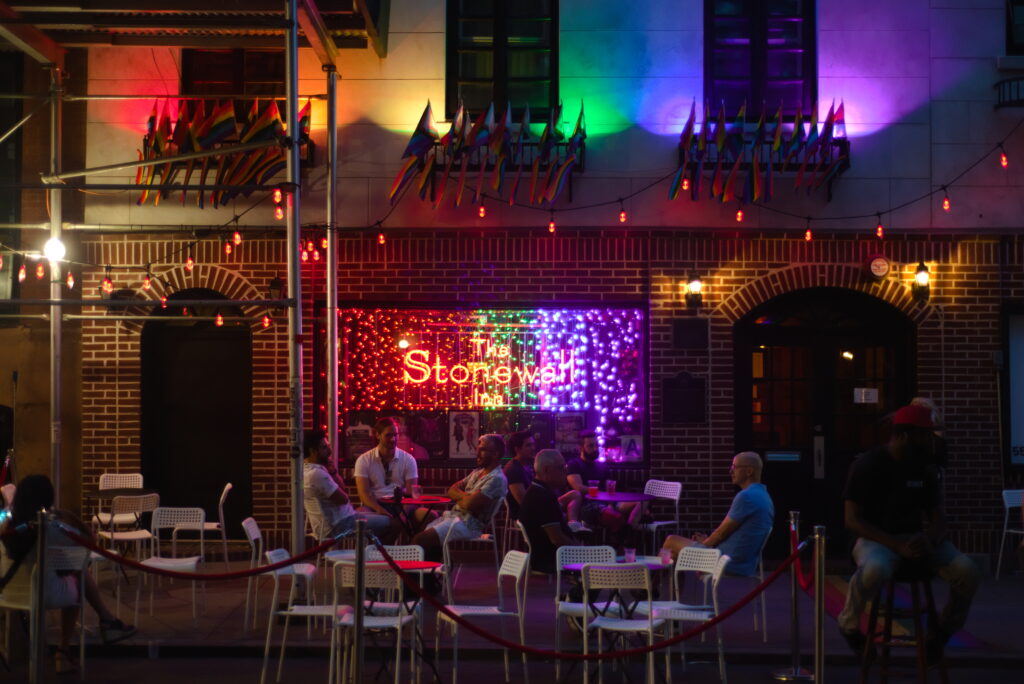
For a population facing severe oppression in their daily lives, nightlife provided much more than entertainment. These establishments were safe spaces where the queer community could escape the violence and hate they encountered in their daily lives, express their identities, and socialize with freedom and safety. The exuberant self-expression and personal liberation found on the dance floor were essential tools for survival. The revelry was an act of resistance, release, and resilience—dancing defied discrimination and death. The disco and house music providing the soundtrack for this movement was emerging from underground Black and Latino queer dance clubs—sanctuaries where the Black and Brown LGBTQ+ community could shed the burden of marginalization and racism to create a vibrant and unique culture of their own. Long before they were mainstream hits, classics such as Sylvester’s 1978 “You Make Me Feel (Mighty Real)” were anthems to self-love and acceptance. Dance floors had become places of radical inclusivity. Important forms of queer expression, such as ballroom culture and voguing, would emerge from this scene.
These nightclubs and bars were also hubs for community building, organizing, and activism. They were places where the LGBTQ+ community could openly come together—and begin to build the powerful advocacy that would reverse the AIDS crisis, and spark the long fight for LGBTQ+ equality. When it came time to fight for the High Line, the two young men who led this effort, Robert Hammond and Joshua David, came from this community. They envisioned the High Line as a community-centered place of belonging for a new generation. Many of these same establishments—such as the Florent Diner—were key players in supporting the early efforts to preserve the High Line.
Today, the High Line is one of the most treasured landmarks in New York, and continues to center LGBTQ+ community, culture, and activism. Pride Month is our opportunity to honor this enduring connection—and the new generations of partners that continue to blossom from those deep, early roots. Pride 2026 is inviting queer adults, allies, LGBTQ+ families, and the general public to experience this seminal aspect of queer culture in a positive and inclusive environment.
Piano Mondays
Few traditions evoke the generational heritage of the LGBTQ+ community in New York more than piano bars. Piano bars emerged on the New York nightlife scene in the 1930s, and became social hubs for the LGBTQ+ community at a time when it was illegal for an establishment to serve an LGBTQ+ clientele. They have remained cultural mainstays over the decades.
Pride 2026 on the High Line kicks off Monday, June 1, with Piano Mondays, a weekly series of family-friendly sing-along sessions that will transform the Spur at 30th Street and 10th Avenue into an open-air piano bar. This joyous celebration of Broadway show tunes will be led by Emmy award-winning composer, lyricist, and performer, Lance Horne of Club Cummings—with surprise guest appearances from other Broadway performers! The real stars of the show will be you—the audience members who take this opportunity to step into the spotlight and take the mic. The High Line has partnered with The Shubert Organization, our Presenting Sponsor, to celebrate the historical LGBTQ+ tradition of piano bars, while introducing a new generation of audiences to this cultural touchstone.
Learn more about Piano Mondays →
Zestyworld Dance Party
On June 11, the High Line is partnering with Zestyworld NYC—a Black and Brown LGBTQ+ party collective rooted in the spirit of New York queer nightlife—to throw its first-ever Pride dance party. Together, we are transforming the covered passage at 15th street into a celebration of movement, music, dance, and connection, to bring together the LGBTQ+ community and its allies from across the five boroughs—especially youth over the age of 21. “Zestyworld at the High Line: a Pride Celebration” is billed as a “joyful gathering of Gworls, Gays, and Theys, centering BIPOC LGBTQ+ culture and people.”
Learn more and RSVP for the Zestyworld Dance Party →
In addition to the programmatic offerings during Pride, the High Line Shop will debut a small collection of Pride-inspired merchandise items.
Learn more about the High Line’s full schedule of 2026 Pride programming →
SUPPORT
The Shubert Organization is the Presenting Sponsor of Piano Mondays.
Keeping our park in the sky operating year-round is only possible through the people-powered support of members like you. 100% of our annual operating budget is provided through donations.
Want to help us keep the High Line free and accessible to all New Yorkers and visitors? Consider making a donation to support the High Line today!
Photo credit for Stonewall image: Atsushi