Due to heavy rain in the forecast, tonight’s High Line Tour: From Freight to Flowers has been canceled. We look forward to seeing you on a future tour!


your inbox
Sign up for the High Line newsletter for the latest updates, stories, events & more.
Who's hiding on the park?
January 21, 2026
The High Line gardens are world-renowned for their four seasons of visual interest—plants whose winter shapes are as striking as their lush spring blossoms. But our cold-weather gardens do much more than create the stark beauty of our winter landscapes; they provide essential shelter and nourishment for our resident and overwintering wildlife. So the next time you’re enjoying a brisk morning stroll on the High Line, stop and look a little closer. While it may be the dead of winter in New York City, the biodiverse ecosystems of the High Line are very much alive.
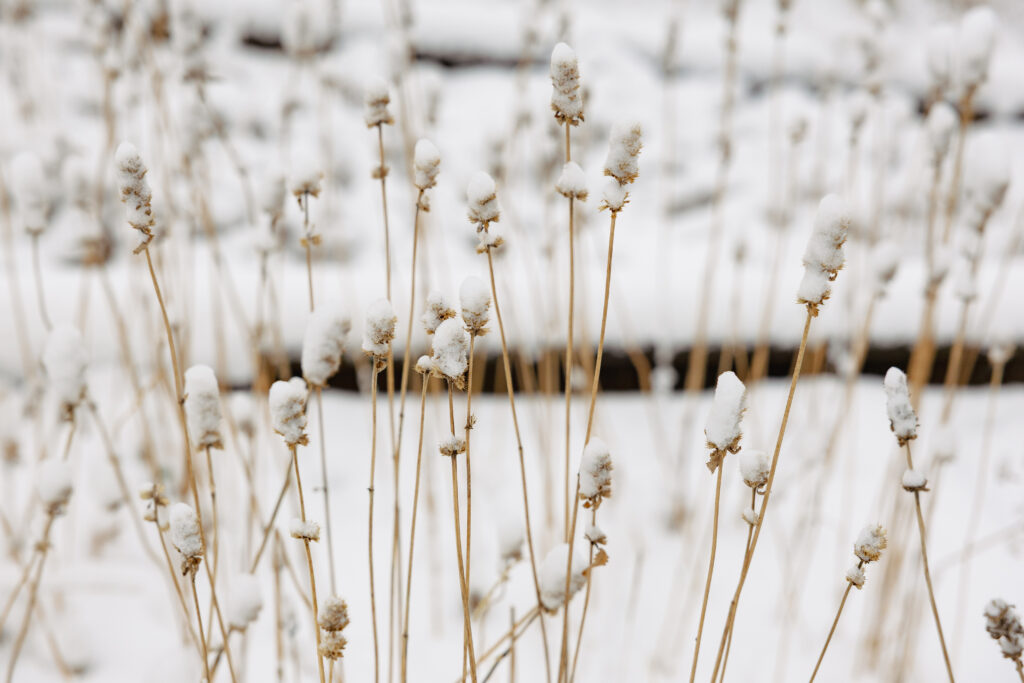
Photo by Liz Devine
A Bug’s Life
The High Line’s gardens are home to a rich and diverse community of creatures and critters—from beneficial insects like beetles and butterflies, to more than 30 varieties of bees. Contrary to the common misperception, not all insects die off during winter. They actually deploy a variety of strategies for surviving the winter—depending on species, they may migrate to warmer climates or stick around and produce a compound in their bodies similar to anti-freeze or find a cozy spot inside a man-made structure to wait out the cold. However, many species, particularly native pollinators, hibernate in their home turf. They hunker down in sheltering habitats such as leaf litter, pithy (hollow) stems, tree bark, or soil, and enter diapause—a dormant state during which their metabolism slows drastically, enabling them to survive on the energy and food stored in their bodies. Insects, depending on their species, can diapause in all stages throughout their lifecycle—as eggs, larvae, pupae, and adults. They emerge from diapause at the first signs of warm weather, healthy and ready to get to work pollinating plants, aiding in decomposition to enrich soil, and playing their essential role in food webs.
The winter diapause is an important phase in the insect lifecycle, and if an insect emerges from their winter shelter too early, or the habitat does not provide adequate shelter, exposure to harsh winter conditions can threaten their survival. That’s why the High Line is so attractive to native and overwintering pollinators and insects—and is such an important engine of biodiversity in New York. Our sustainable horticulture practices are specifically designed to create and protect these critical winter habitats. We do not cut back our gardens in the fall, but let our stems, stalks, and seedheads stand, and leave our thick cover of leaf litter intact, to provide the shelter and food our wildlife needs to survive. We also do not use pesticides or chemical fertilizers that would threaten or endanger these populations. In March, as many insects are emerging from their diapause, we begin very selectively cutting back our gardens to make room for new spring growth. Our horticulturists take care to avoid cutting back plants that are known to be the winter shelters of key native pollinators and insects, flagging those to avoid.
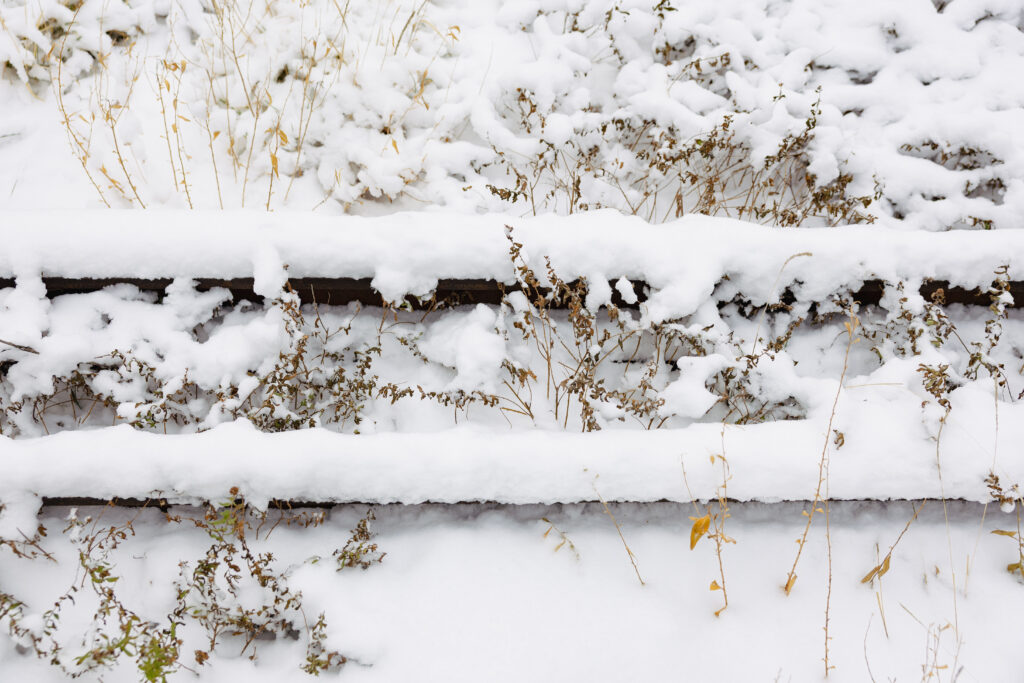
Photo by Liz Devine
So, who’s hiding on the park?
Here’s a guide to the High Line’s winter habitats and the wildlife hibernating on the High Line.
Leaf litter: Beneath the camouflage and insulation of the organic debris that accumulates on the garden floor, you’ll find ladybugs, ground beetles, butterfly caterpillars, moth eggs, and pupae. Morning Cloak butterflies diapause as adults, carefully hidden away. Swallowtails disguise their cocoons as leaves.
Soil: Native bees, such as leafcutters and sweat bees, nest in soil, beneath the leaf layer, in underground tunnels. They hibernate as both adults and pupae. Seventy percent of native bees are ground nesters.
Pithy plant stems: Bees, wasps, and lacewings prefer to lay their eggs in the hollow stems of perennial plants and weed stalks.
Tree bark: Beetles and ladybugs find snug winter homes in the cavities and crevices of tree bark. You’ll also find them in fallen logs and branches.
Creating Creature Comforts
You don’t need to be a professional horticulturist or have a large garden to provide safe winter homes for pollinators and beneficial insects. With just a few simple adjustments to your gardening practices—or even a few plants, you too can do your part.
Leave the leaf litter. As tempting as it is to clean out your flower beds, let the leaf litter stand. Beetles and ladybugs will make their winter home here.
Put off the cut back. The stems and stalks of your “dead” summer blooms have an important job to do, providing nesting spots for bees. The seed heads also provide important food for birds and insects. Cut them back in spring instead of the fall to make room for new growth.
Be an Air-bee-n-bee. Logs and branches can be turned into “bee hotels.” Drill small holes into an untreated log or thick branch to create nesting tunnels, and place it in a sheltered location.
Look closely. Insects in diapause—as well as their nests and cocoons—are often carefully camouflaged or otherwise not easy to detect visually.
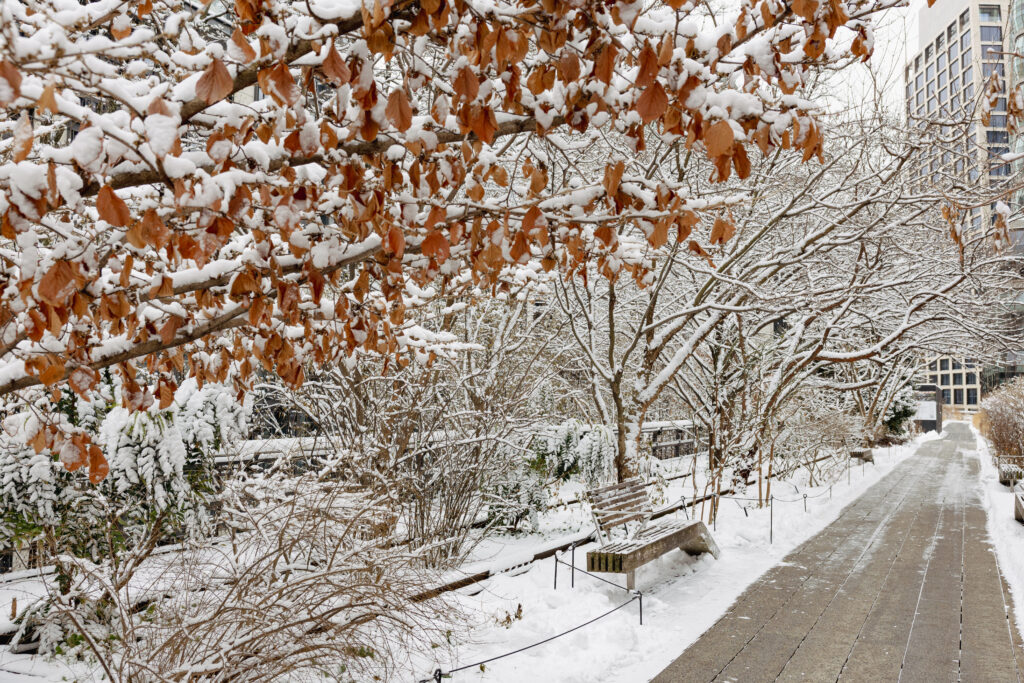
Photo by Liz Devine
Want to help us keep the High Line biodiverse and thriving for all New Yorkers and visitors of all kinds?
Maintaining the High Line’s gardens year-round is only possible through the people-powered support of individuals like you. Almost 100% of the Friends of the High Line’s annual operating budget is provided through donations. We’re the nonprofit conservancy that runs and raises the funds for the park! Consider making a donation to support the High Line today!