Due to heavy rain in the forecast, tonight’s High Line Tour: From Freight to Flowers has been canceled. We look forward to seeing you on a future tour!


your inbox
Sign up for the High Line newsletter for the latest updates, stories, events & more.
Saba Khan
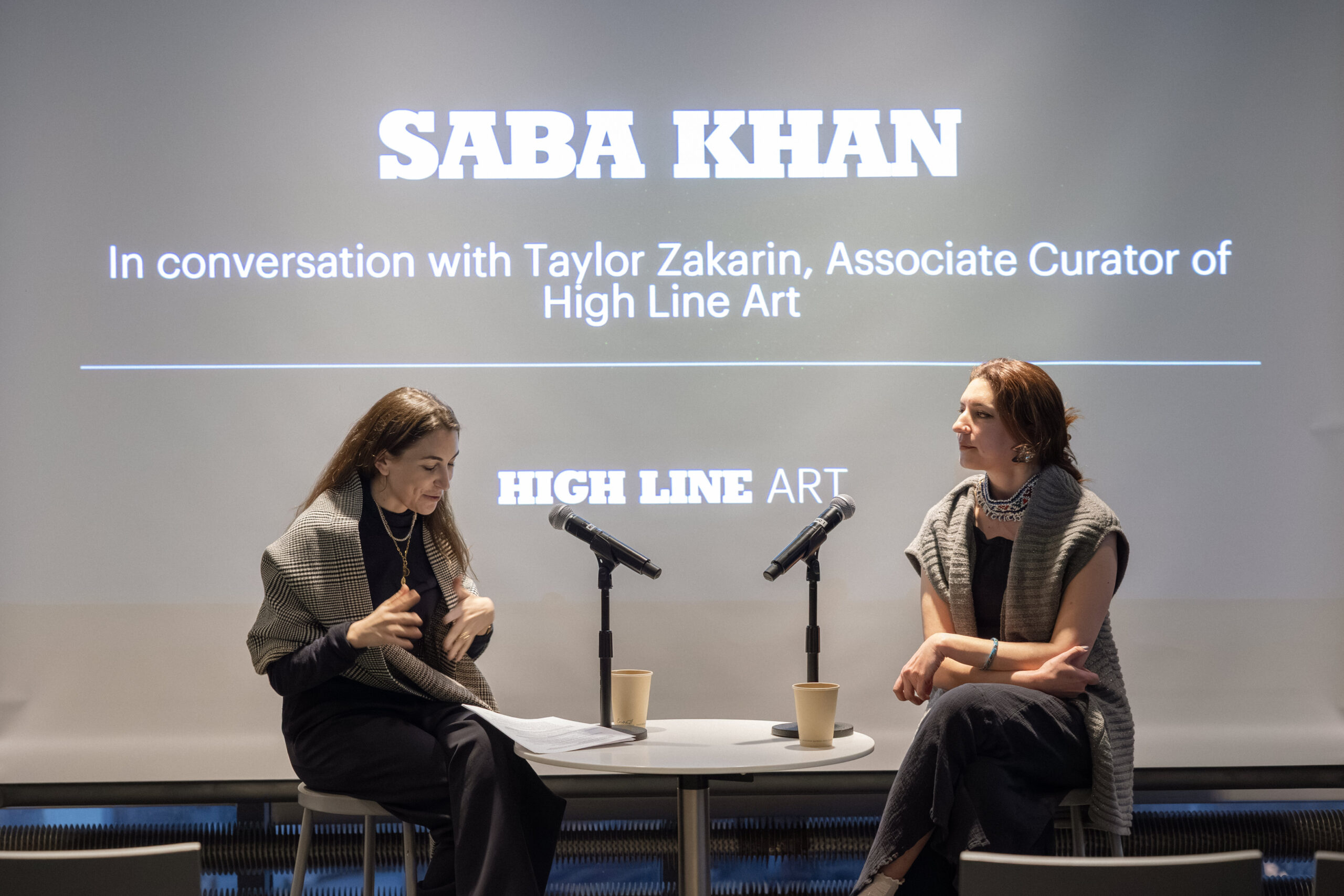
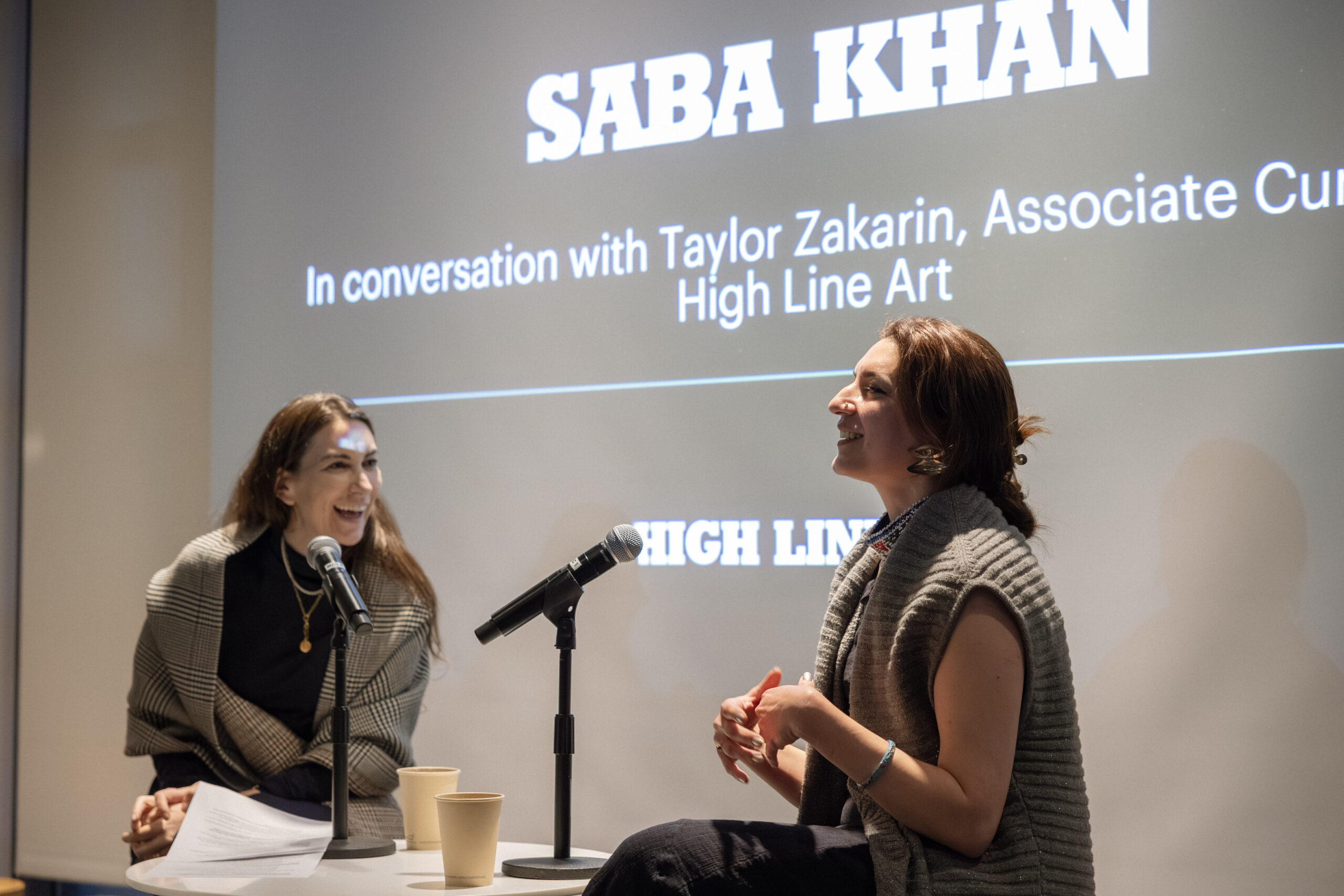
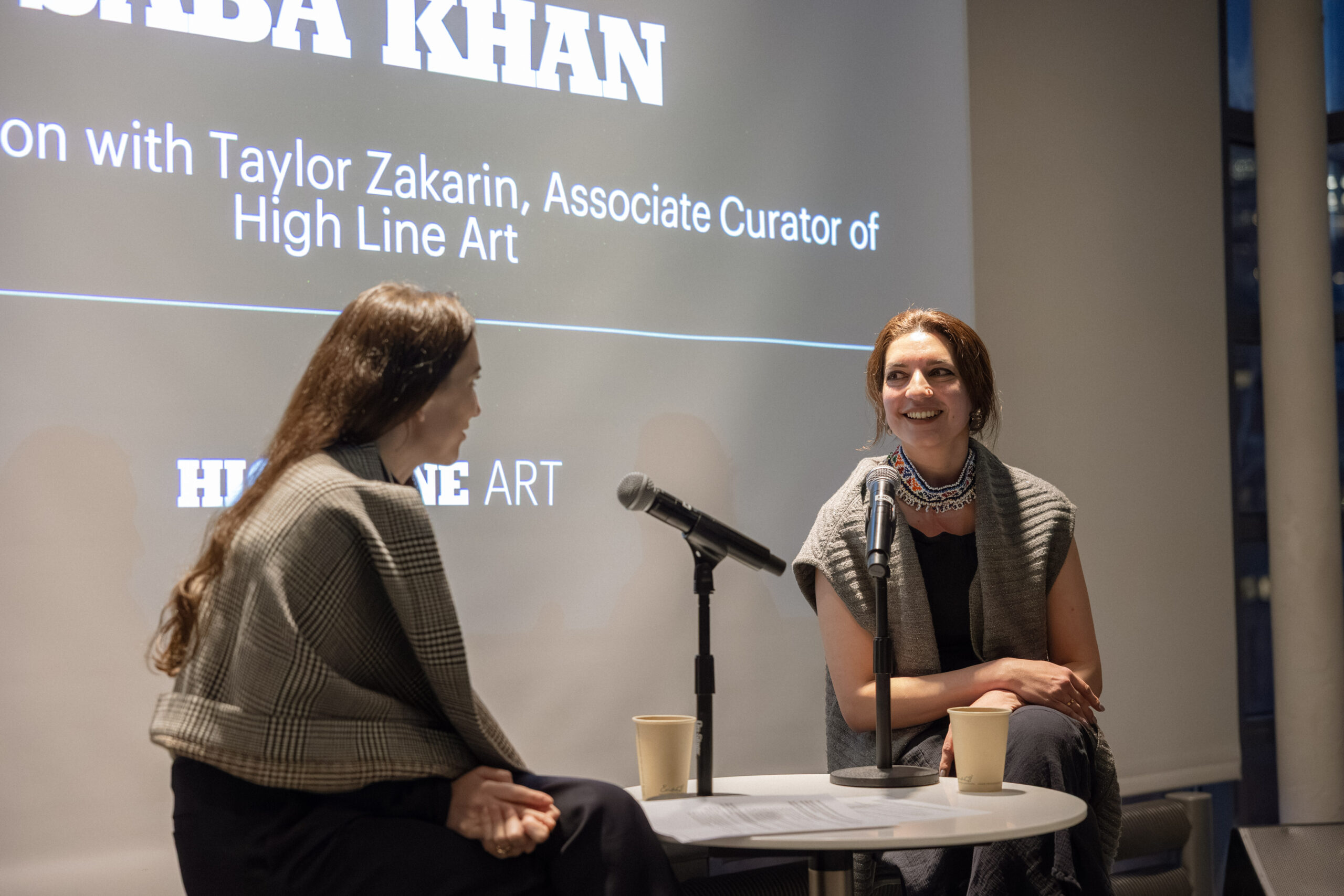
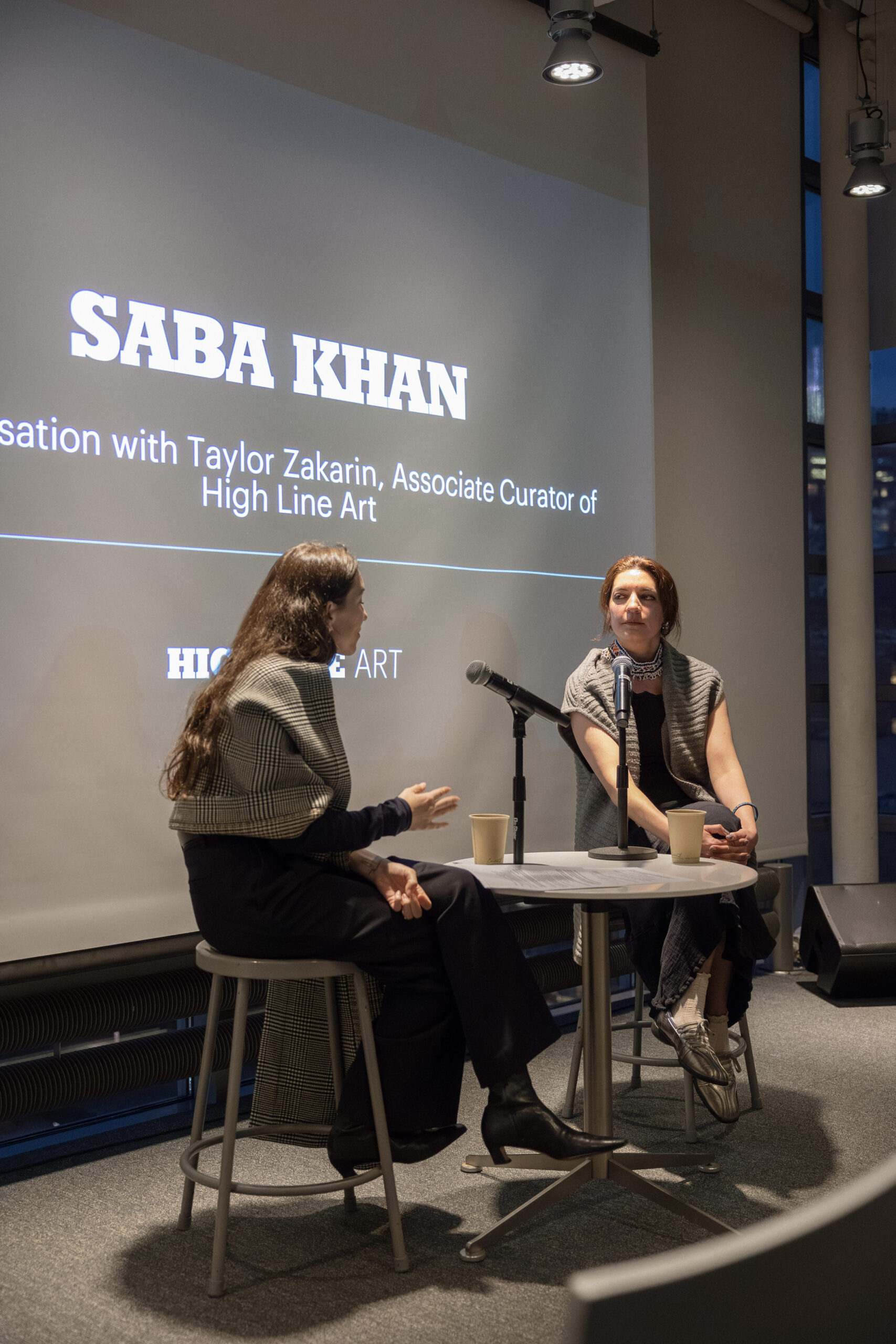
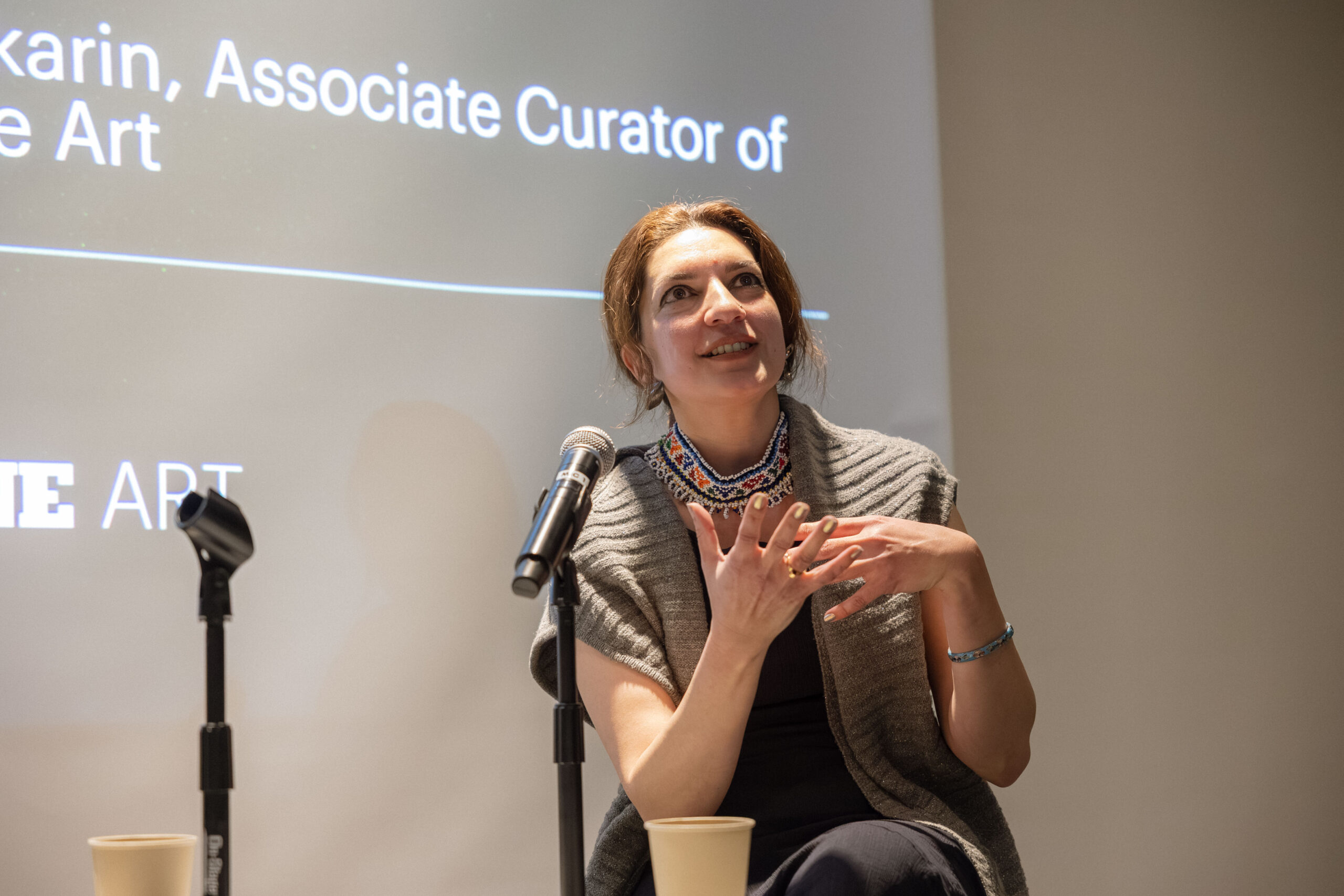
Artist Talk: Saba Khan in conversation with Taylor Zakarin (Indoor Event)
Friends of the High Line Headquarters
4th Floor
820 Washington Street
New York, NY 10014
Join us for an in-depth conversation between artist Saba Khan and Taylor Zakarin, Associate Curator of High Line Art, as they discuss Khan’s High Line Channel exhibition, which screens from 12 – 8pm daily on the High Line at 14th Street.
Saba Khan’s practice is grounded in the intersection of art, ecology, and colonial history, often fueled by immersive fieldwork and expeditions. She explores bureaucratic structures and the legacy of “Third World modernism”—a post-colonial aesthetic that used grand infrastructure to project visions of national progress and independent statehood. Khan’s work satirically weaves together language and imagery relating to memorials, monuments, and public projects to critique how “modern” monuments often mask environmental decay and entrench class divides.
For her exhibition on High Line Channel, Khan presents three video works—Leaking Ocean (2025), Water Lords (2023), and The Dolphin (2023)—that explore the life-changing elements of water and the fraught politics of its distribution. Her research takes her from the “Third Pole” glaciers of northern Pakistan and the industrial barrages of the Indus River. In presenting these three works together, Khan examines the diverse ways humanity attempts to control water: from the spiritual “glacier-grafting” rituals of the Balti communities, to the massive colonial and post-colonial-era dams and barrages designed to tame the Indus.
Leaking Ocean documents the ancestral work of glacier-grafting, practiced by the Balti communities in Gilgit Baltistan. Collaborating with local filmmakers to reach the strenuous heights of the Zomia region—a highland territory historically used as a refuge from state reach—Khan captures a spiritual and communal effort to “plant” new glaciers. While the government pursues massive concrete dam projects that spiral the country into international debt, the Baltis treat the glacier as a living, shape-shifting being. The film poignantly connects this remote ritual to a global biosphere: as these glaciers melt, the resulting freshwater runoff threatens to desalinate the Arabian Peninsula and clog infrastructure on distant shores, proving that no ecosystem exists in isolation.
Both Water Lords and The Dolphin were produced through Khan’s research work with the Pak Khawateen Painting Club, a satirical collective of female artists founded by the artist. Posing as a bourgeois, patriotic plein air painting group, Khan and the Khawateen were able to access, study, and photograph highly militarized infrastructure sites along the Indus.
In Water Lords, Khan investigates the enduring legacy of “water lords” first designated by British colonizers. These figures, who historically controlled resource allocation to maximize imperial agricultural output, remain entrenched in the power structures of modern Pakistan. The video considers how the massive infrastructures controlled by water lords have effectively de-watered the Indus, likely soon reducing it to a trickle at the sea’s mouth, displacing communities, and destroying protective mangrove forests. By weaving research from David Gilmartin’s Blood and Water with her own field observations, Khan questions a national development agenda that prioritizes economic control over the Indigenous populations and natural ecosystems that have lived alongside the river for millennia.
The Dolphin offers a haunting meditation on the Indus River dolphin, a species that has, over time, evolved to lose its sight due to the heavy silt of Pakistan’s eroding mountains. These animals are physically trapped between two constructed barrages, their mating pools curtailed and their survival threatened by the structures intended to theoretically civilize and purify the water. Through the plight of the few hundred remaining dolphins, Khan illustrates the ultimate cost of environmental engineering: a world where the inhabitants are blinded, their testimony erased, and their lives confined by the heavy hand of “progress.”
Artist bio
Saba Khan (b. 1982, Lahore, Pakistan) lives and works between London, United Kingdom, and Lahore, Pakistan. Khan has presented solo exhibitions at institutions including Midlands Arts Centre, Birmingham, United Kingdom (2026); Contemporary and Modern Art Museum, Lahore, Pakistan (2019); and Taseer Art Gallery, Lahore, Pakistan (2015). Notable and recent group exhibitions include the 18th International Triennial of Textile, Central Museum of Textiles, Łódź, Poland (2015); Energies, Swiss Institute, New York, New York (2024); Manzar: Art and Architecture from Pakistan, National Museums of Qatar, Doha, Qatar (2024); Gangwon International Triennale, Gangneung, South Korea (2024); Sharjah Biennial 15, Sharjah, United Arab Emirates (2023); Pop South Asia, Kiran Nadar Museum of Art, New Delhi, India (2023); Diasporic Rhizomes, South Asia Institute, Chicago, Illinois (2021); and the Karachi Biennial, Karachi, Pakistan (2017). Khan is the founder of the Murree Museum Artist Residency, Pakistan (2014 – 2020), and co-founder of the satirical collective Pak Khawateen Painting Club (2019 – 2023). She has received grants and awards from 421 Arts Campus, Abu Dhabi (2022); the Foundation for Arts Initiatives, New York (2018); Sharjah Art Foundation (2020); the Graham Foundation, Chicago (2020); and the British Council (2020, 2021, 2022).
Support
Lead support for High Line Art comes from Amanda and Don Mullen. Major support is provided by Shelley Fox Aarons and Philip E. Aarons, The Brown Foundation, Inc. of Houston, and Charina Endowment Fund.
Program support for High Line Art is provided by Suzanne Deal Booth, Charlotte Ford, Molly Gochman, and Joyce F. Menschel. Additional support for High Line Art commissions is provided by Shane Akeroyd, Sarah Arison, and Agnes Gund.
High Line Art is supported, in part, with public funds from the New York State Council on the Arts with the support of Governor Kathy Hochul and the New York State Legislature, and the New York City Department of Cultural Affairs in partnership with the New York City Council, under the leadership of Speaker Julie Menin.

Major support of High Line Art digital infrastructure is provided by Bloomberg Philanthropies.