Due to heavy rain in the forecast, tonight’s High Line Tour: From Freight to Flowers has been canceled. We look forward to seeing you on a future tour!


your inbox
Sign up for the High Line newsletter for the latest updates, stories, events & more.
Sopheap Pich
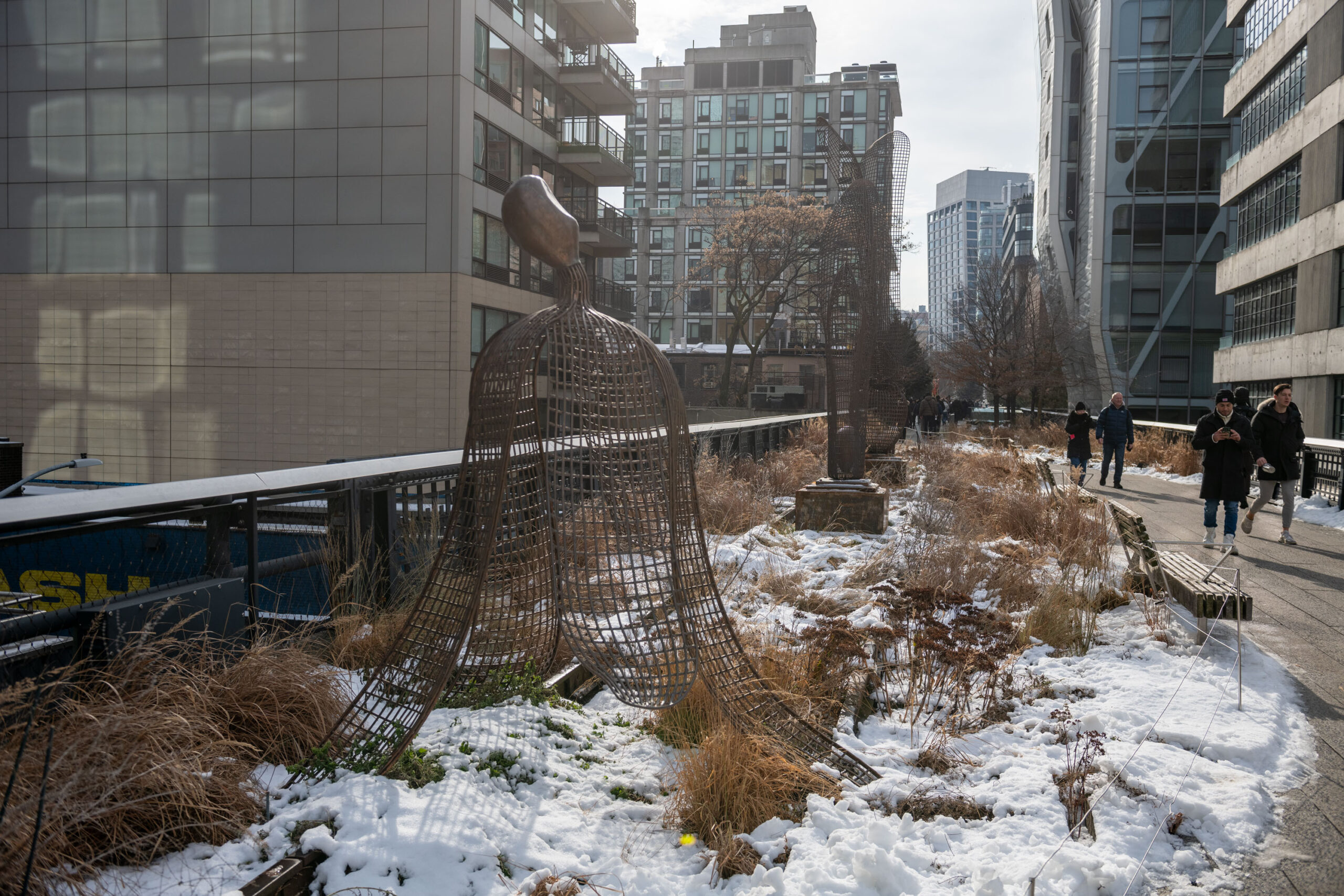
Kânh Chhrôôl (Gluta Usitata), Melembu, and Khlông (Dipterocarpus Tuberculatus)
On the High Line at 24th Street
Sopheap Pich works primarily with natural materials—bamboo, rattan, burlap, beeswax, and earth pigments—and materials of the developing world such as discarded metal gathered from around Cambodia. He uses these to make sculptures and installations inspired by bodily organs, vegetal forms, and abstract geometric structures. Pich’s childhood experiences during the Khmer Rouge genocide of Cambodian people in the late 1970s had a lasting impact on his work, informing its themes of time, memory, nature, and the body. Through his exploration of organic shapes and utilizing a slow, handmade process, the artist considers themes of identity and displacement, reflecting his own journey as a refugee and immigrant.
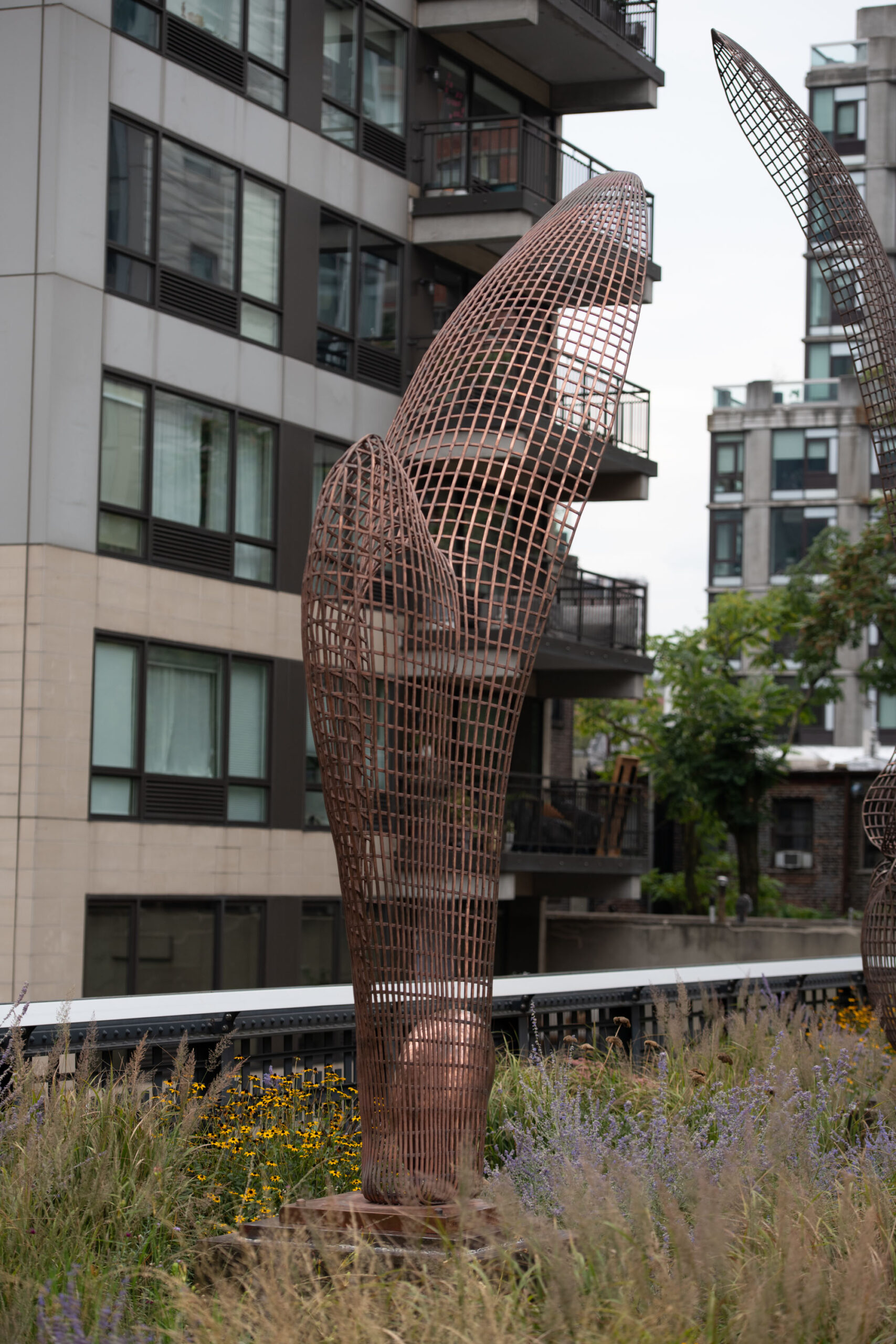
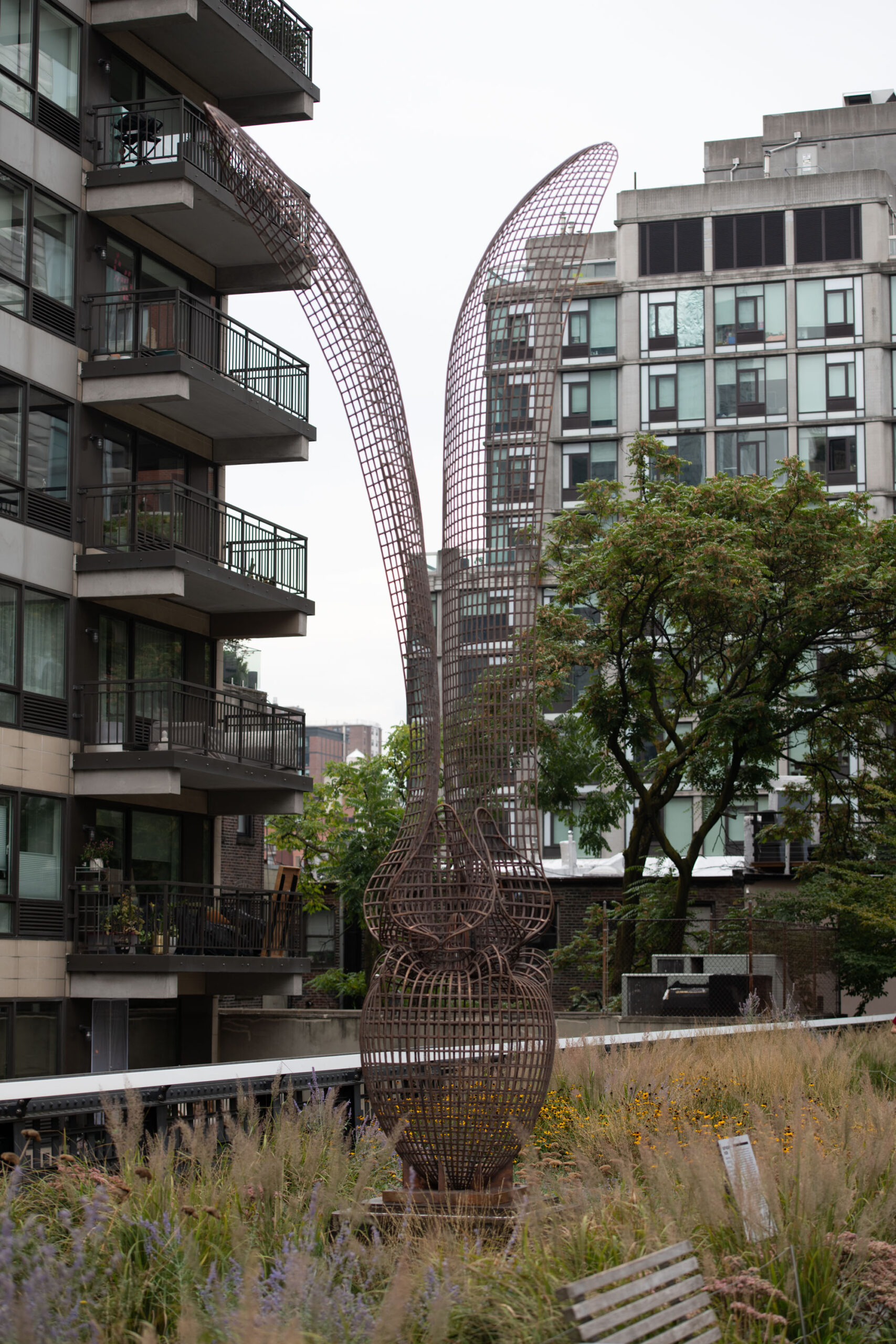
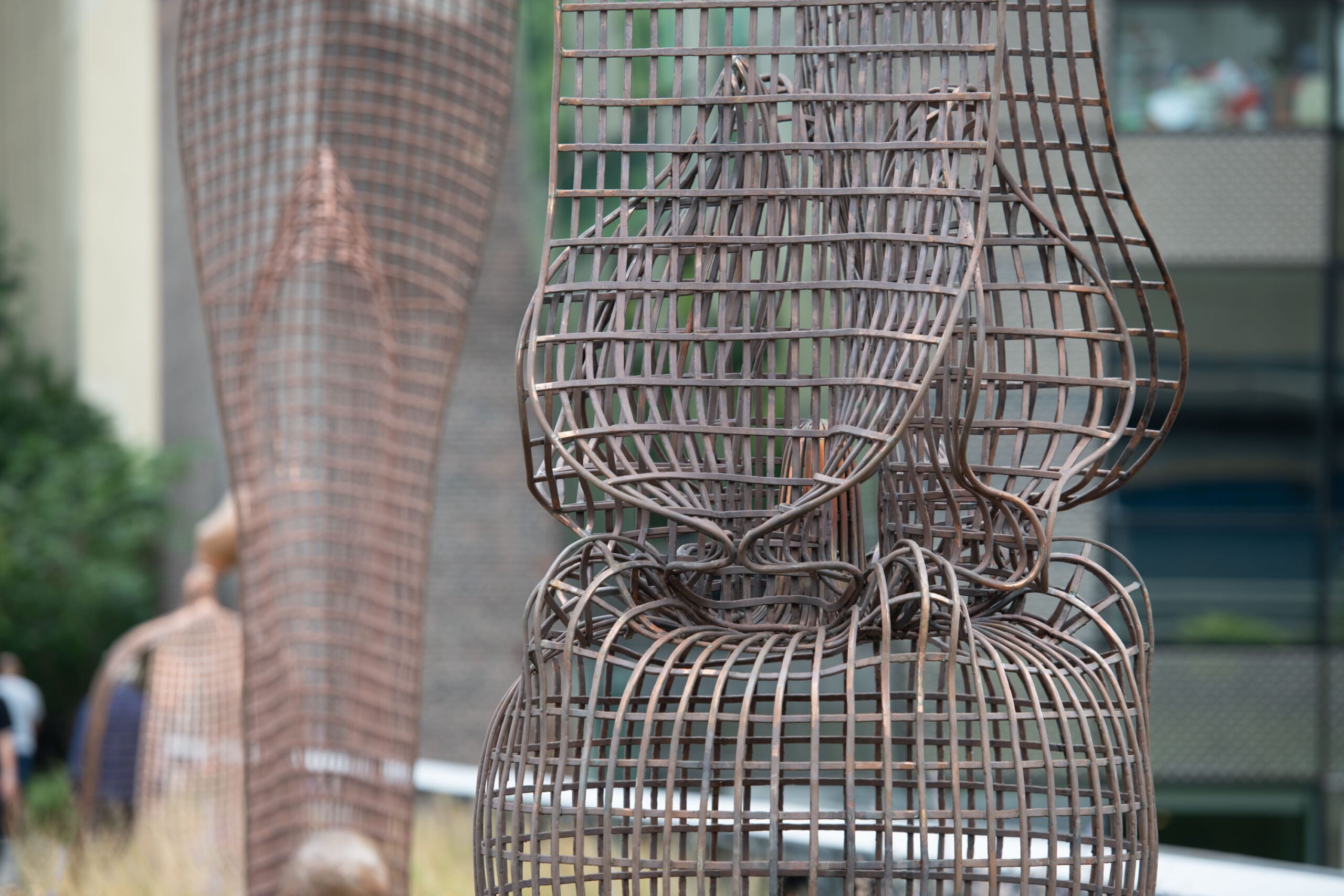
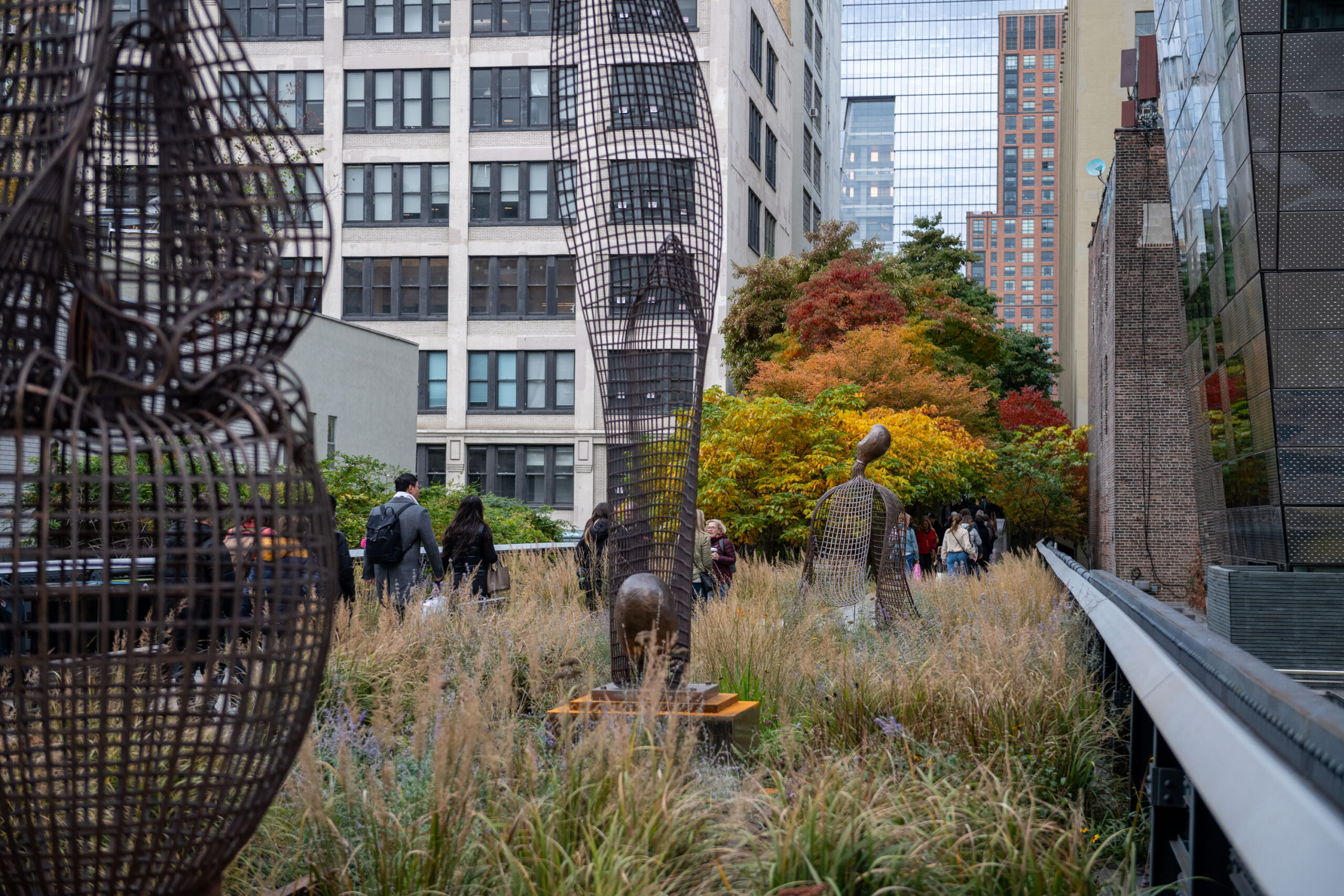
For the High Line, Pich presents Kânh Chhrôôl (Gluta Usitata), Melembu, and Khlông (Dipterocarpus Tuberculatus), three copper and steel sculptures inspired by seedpods of the hardwood trees that stand in the garden of the National Museum of Cambodia and the artist’s garden in Phnom Penh. On windy afternoons, seeds circle down from the giant tree canopies like falling helicopters, their movement also suggesting a minimal rendition of a landing bird. The seeds’ wings allow them to fly far away from their mother tree to eventually take root. Now rare in the wild, as the trees are cut down by poachers for their valuable timber, the seed pods suggest the attention we must give to nature and all it touches, from natural and man-made disasters to human migration and displacement caused by transformations in society and the environment.
Artist bio
Sopheap Pich (b. 1971, Battambang, Cambodia) lives and works in Phnom Penh, Cambodia. Pich has held solo exhibitions at institutions including Crow Collection of Asian Art, Dallas, Texas (2017); Indianapolis Museum of Art, Indianapolis, Indiana (2014); Metropolitan Museum of Art, New York, New York (2013); Sherman Contemporary Art Foundation, Sydney, Australia (2013); and Henry Art Gallery, University of Washington, Seattle, Washington (2011). He has participated in major international group exhibitions, including Diriyah Contemporary Art Biennale, JAX District, Riyadh, Saudi Arabia (2024); Angkor Complex: Cultural Heritage and Post-Genocide Memory in Cambodia, University of Michigan Museum of Art, Ann Arbor, Michigan (2024); World Classroom: Contemporary Art Through School Subjects, Mori Art Museum, Tokyo, Japan (2023); 14th Gwangju Biennale, Gwangju National Museum, Gwangju, South Korea (2023); Souffles, National Museum of Cambodia, Phnom Penh, Cambodia (2022); A beast, a god, and a line, MAIIAM Contemporary Art Museum, Chiang Mai, Thailand (2021); Home Is a Foreign Place, Metropolitan Museum of Art Breuer, New York, New York (2019); Minimalism: Space. Light. Object, National Gallery of Singapore, Singapore (2018); Buddha’s Smile, National Gallery of Victoria, Melbourne, Australia (2017); First Look: Collecting Contemporary at the Asian, Asian Art Museum, San Francisco, California (2015); The Art of Our Time: Masterpieces From the Guggenheim Collections, Guggenheim Museum Bilbao, Bilbao, Spain (2014); dOCUMENTA (13), Kassel, Germany (2012); and Invisible Cities, MASS MoCA, North Adams, Massachusetts (2012).
Pich’s work is featured in the permanent collections of museums around the world including the Metropolitan Museum of Art, New York, New York; Solomon R. Guggenheim Museum, New York, New York; Museum of Arts and Design, New York, New York; Smith College Museum of Art, Northampton, Massachusetts; Albright-Knox Art Gallery, Buffalo, New York; San Francisco Museum of Modern Art, San Francisco, California; United States Holocaust Memorial Museum, Washington, DC; Asian Art Museum, San Francisco, California; Cleveland Museum of Art, Cleveland, Ohio; Ford Foundation, New York, New York; Bill & Melinda Gates Foundation, Seattle, Washington; Ackland Art Museum, University of North Carolina at Chapel Hill, North Carolina; M+ Museum of Visual Culture, Hong Kong; Museum of Contemporary Art, Tokyo, Japan; Mori Art Museum, Tokyo, Japan; Singapore Art Museum, Singapore; MAIIAM Contemporary Art Museum, Chiang Mai, Thailand; Centre Pompidou, Paris, France; Queensland Art Gallery, Brisbane, Australia; Sherman Contemporary Art Foundation, Sydney, Australia; and King Abdullah University of Science and Technology, Thuwal, Saudi Arabia.
Support
Lead support for High Line Art comes from Amanda and Don Mullen. Major support is provided by Shelley Fox Aarons and Philip E. Aarons, The Brown Foundation, Inc., and Charina Endowment Fund.
High Line Art is supported, in part, with public funds from the New York State Council on the Arts with the support of Governor Kathy Hochul and the New York State Legislature, and the New York City Department of Cultural Affairs in partnership with the New York City Council, under the leadership of Speaker Adrienne Adams.

Major support of High Line Art digital infrastructure is provided by Bloomberg Philanthropies.

Sopheap Pich (n. 1971, Battambang, Camboya) trabaja principalmente con materiales naturales, bambú, ratán, arpillera, cera de abeja y pigmentos de origen natural, y materiales del Sur Global como metales desechados recolectados en distintas regiones de Camboya. Él los usa para crear esculturas e instalaciones inspiradas en órganos corporales, formas vegetales y estructuras geométricas abstractas. Las experiencias de su infancia durante el genocidio Jemer Rojo en Camboya finales de la década de 1970, tuvieron un impacto duradero en su trabajo y sentaron las bases de sus temas: el tiempo, la memoria, la naturaleza, y el cuerpo. A través de su exploración de formas orgánicas y mediante un proceso artesanal lento, el artista reflexiona sobre temas de identidad y desplazamiento, aludiendo a su propia experiencia como refugiado e inmigrante.
Para el High Line, Pich presenta Kânh Chhrôôl (Gluta Usitata), Melembu y Khlông (Dipterocarpus Tuberculatus), tres esculturas de cobre y metal, inspiradas en las vainas de semillas de los árboles de hojas caducas que se encuentran en el jardín del Museo Nacional de Camboya y en el jardín del propio artista en Nom Pen. En las tardes ventosas, estas semillas caen de las copas de los árboles gigantes girando como helicópteros en descenso. Por otra parte, la caída de las semillas también sugiere una interpretación minimalista de un ave aterrizando. Las alas permiten que las semillas vuelen lejos del árbol madre con el fin de echar raíces. Estos árboles ahora son raros en la naturaleza, ya que son talados por cazadores furtivos dado a su valiosa madera. Las vainas de semillas muestran la atención que debemos prestar a la naturaleza y a todo lo que ella toca, desde fenómenos naturales y las catástrofes provocadas por el hombre hasta la migración humana y el desplazamiento causados por transformaciones en la sociedad y el ambiente.
Sopheap Pich(1971年生于柬埔寨马德望)主要使用自然材料,如竹子、藤条、麻布、蜂蜡和天然颜料,也使用来自发展中国家的材料,如从柬埔寨各地收集的废弃金属。他利用这些材料创作雕塑和装置作品,灵感包括人体器官、植物形态和抽象几何结构。Pich 在童年时期经历了20世纪70年代末红色高棉对柬埔寨人民的大屠杀,这段经历对他的创作产生了深远影响,使作品贯穿着时间、记忆、自然与身体的主题。通过对有机形态的探索,以及缓慢的手工创作过程,艺术家思考身份与流离的主题,反映了他作为难民和移民的个人经历。
在高线公园,Pich 呈现了三件由铜与其他金属制成的雕塑:《Kânh Chhrôôl(缅甸漆树)》、《染色舟翅桐》和《Khlông(小瘤龙脑香)》,其灵感来自柬埔寨国家博物馆花园和艺术家位于金边的花园中硬木树的种荚。在起风的午后,这些种子犹如下降的直升机,从巨大的树冠上旋转下落。种子的形态亦像是鸟儿轻轻降落的简约呈现。翅膀使种子能够远离母树飞行,最终落地生根。这些树木因其珍贵木材而被偷伐,在野外已变得十分稀少。种荚提醒着我们必须关注自然及其所波及的一切,无论是自然或人为灾害,还是由社会与环境变化引发的人类迁徙与流离失所。