Due to heavy rain in the forecast, tonight’s High Line Tour: From Freight to Flowers has been canceled. We look forward to seeing you on a future tour!


your inbox
Sign up for the High Line newsletter for the latest updates, stories, events & more.
What's new in our gardens
November 7, 2025
From the Chelsea Grasslands to the Rail Yards Preserve, the plant communities of the High Line’s naturalistic gardens are carefully planned to offer four seasons of stunning visual interest and provide nourishing habitats for our birds and pollinating wildlife. In addition to enhancing the garden experience for visitors, it also amounts to sustained biodiversity, resilience, and balance in our park’s ecosystems. Thanks to the expert horticulture team that cultivates these dynamic landscapes, there’s always something new to see in the gardens.
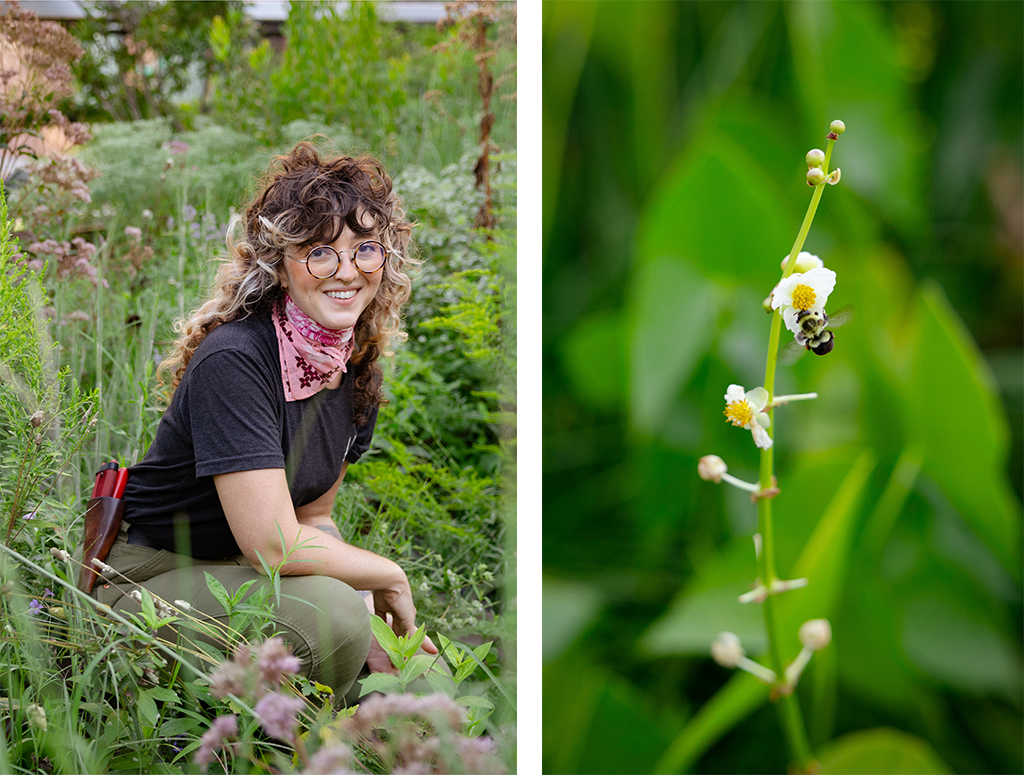
A duck [potato] in the wetlands
“The new irrigation system on the Diller – von Furstenberg Sundeck allowed me to introduce Sagittaria latifolia (duck potato), a native wetland species that blooms in early August and supports native pollinators. To maximize the section as a pollinator magnet, I adapted Piet Oudolf’s original drawings to incorporate more of these New York wetland natives.”
Shelby Miller
Diller – von Furstenberg Sundeck and Water Feature
14th – 15th Streets
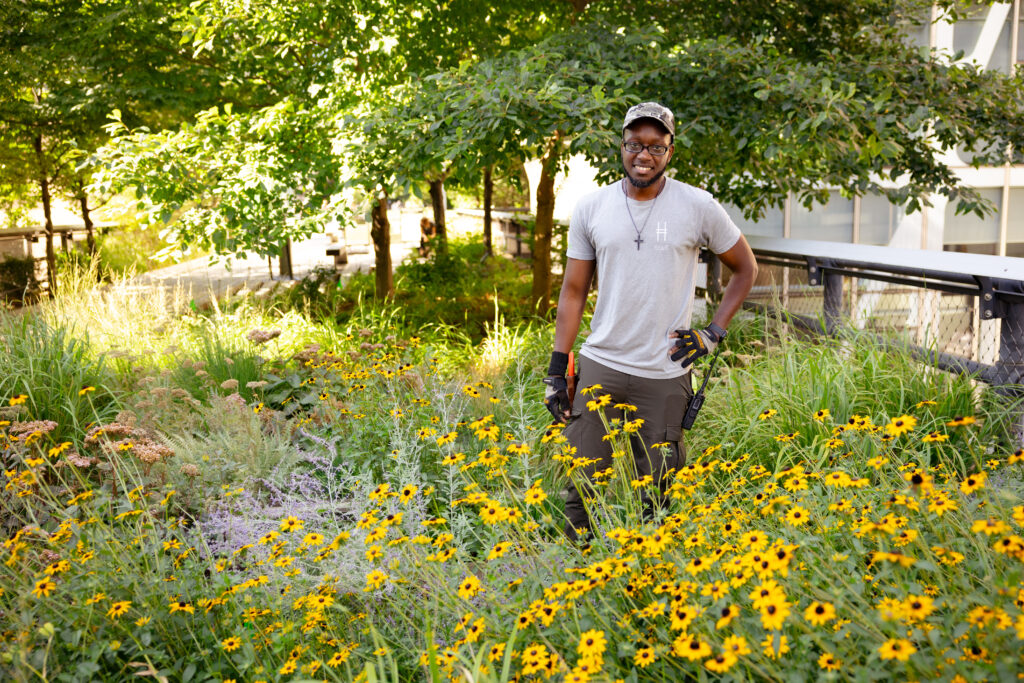
An adjustment in approach
“As the park ages, new techniques need to be employed to address changing conditions. I’ve been working all season long to mitigate the effects of shade from a maturing tree canopy by replacing plants in my section that aren’t thriving with new species. One plant to look forward to in the spring is Tiarella cordifolia (foam flower), a flowering perennial that has a bright white bloom and nice texture.”
Ayinde Listhrop
Meadow Walk
23rd – 25th Streets
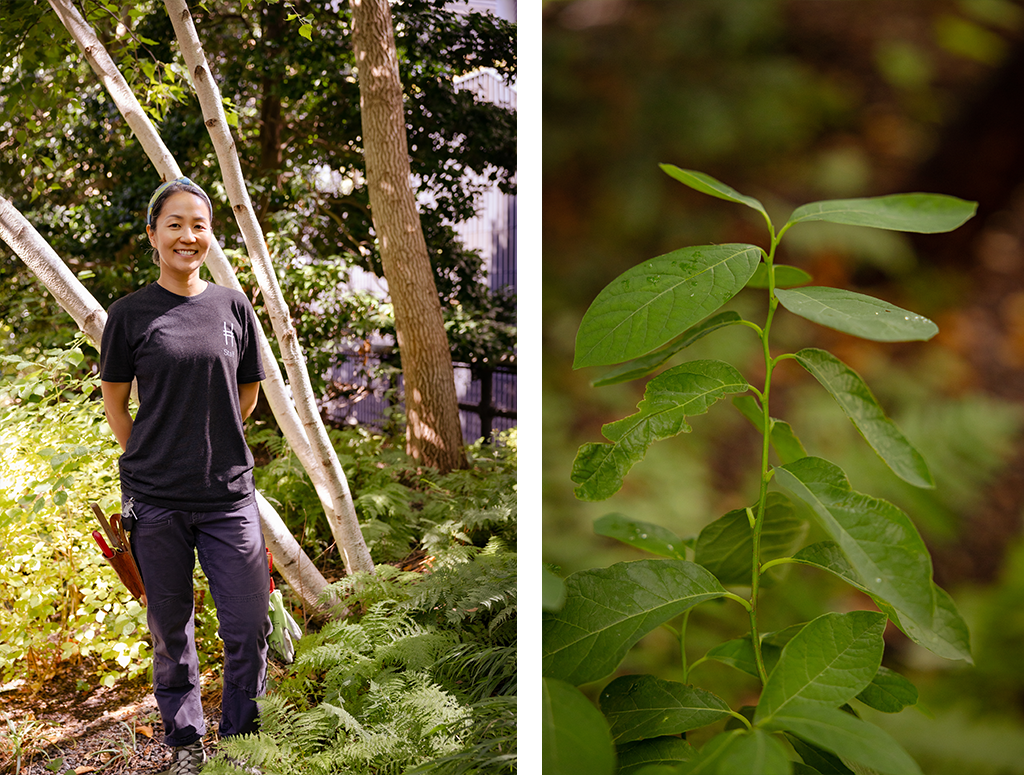
Scents of the woodland edge
“I’ve focused on playfully incorporating plants with aromatic scents throughout the Thicket. I’ve recently introduced two new species—sweet woodruff, Galium odoratum, and spicebush, Lindera benzoin. The native spicebush is similar to a forsythia in the spring, although not as vibrant.
To combat erosion, I’ve added birch logs on the floor of the planting beds, mimicking fallen trees. The park’s robins love to perch on these birch logs because they provide a nice, safe vantage point for them. Robins live up in the trees and come down to the logs. I’ve even seen mother birds leave their fledglings on the logs while they hunt for food.”
Annie Cho
Chelsea Thicket
20th – 22nd Streets
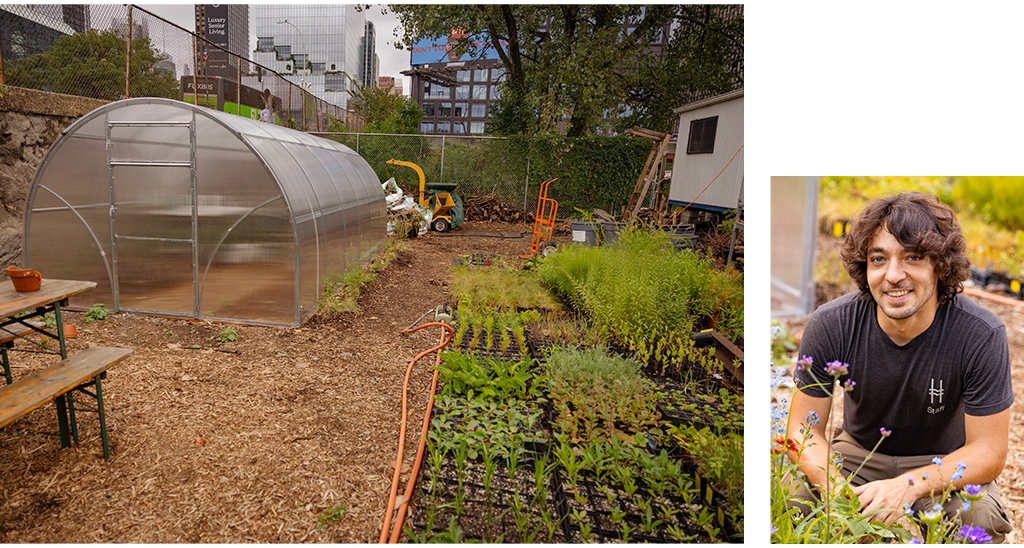
A tucked-away space to grow, chip & compost
“Over the last two years, the lot at 34th Street has been a personal passion project. It serves as our main space for propagation and chipping and will soon include composting. A significant achievement this year was building a 10′×20′ greenhouse with the help of volunteer Miles Clyde. This facility is crucial for achieving the horticulture team’s sustainability goals and establishing a more efficient, closed-loop system for plant sourcing. We plan to implement the composting program—a practice I’m eager to revive from the park’s history—this winter, with full functionality targeted for spring 2026.”
Joe Conlan
18th Street Plaza, Western Rail Yards
18th Street & 10th Avenue; 30th – 34th Streets, between 11th and 12th Avenues
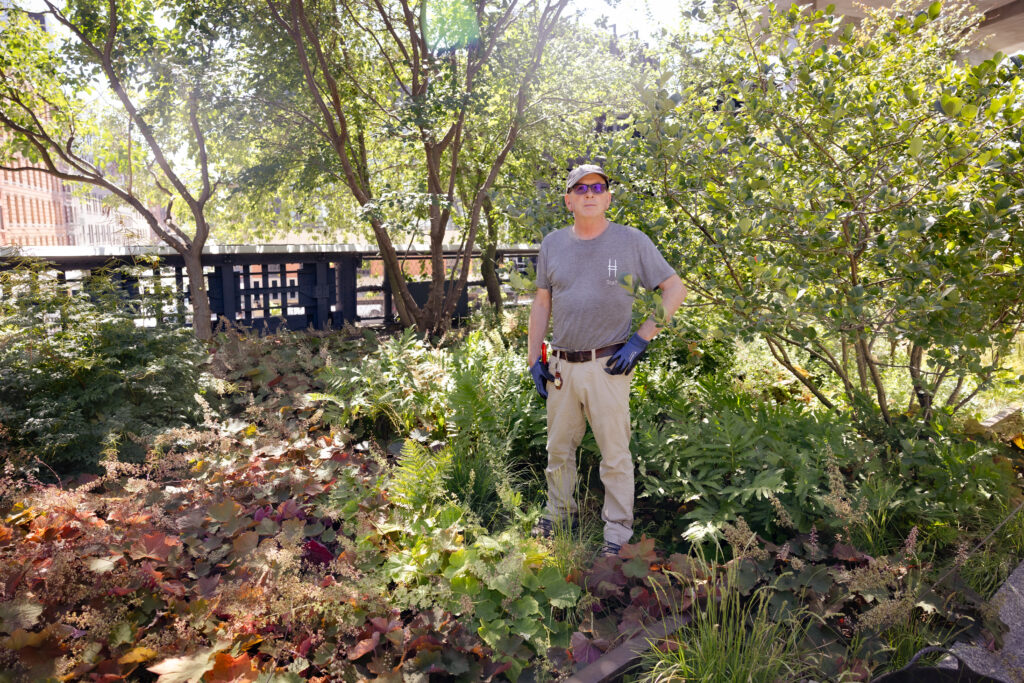
A wild Allium
“I’ve introduced ornamental oregano with a prominent seedhead, and Allium cernuum, commonly known as nodding onion. I chose the nodding onion because I needed a new, drought-tolerant plant to break up the calamint in the tapers. This Allium is native to North America. Its delicate pink flowers complement the lilac-pink flower color of the calamint, and produce shiny black seeds that provide winter interest and food for our birds. The nodding onion is also an excellent pollinator plant—bees and butterflies love them!”
John Gunderson
Gansevoort Woodlands, Washington Grasslands & Woodland Edge
Gansevoort – 14th Streets
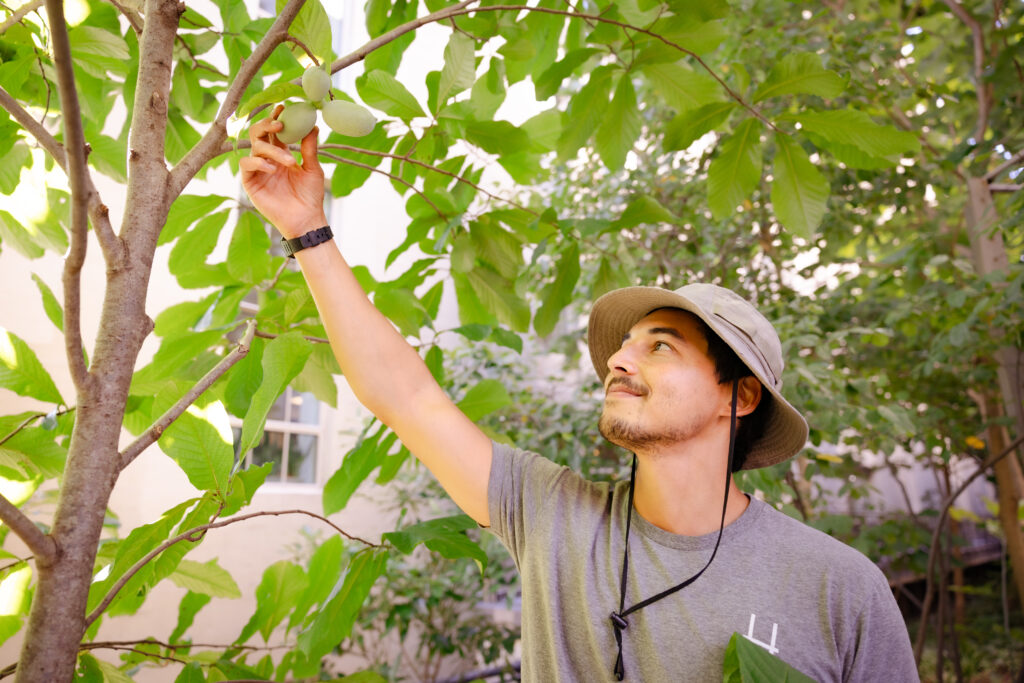
Fruit trees hidden on the Flyover
“I’ve been cultivating the paw paw tree, which had been planted in the Flyover beds as an experiment by a previous horticulturist. This tree is native to the Northeast and produces a fruit with a banana/mango taste and a custardy texture. This is an understory tree, and I’m trying to create greater height variation in the Flyover understory. Its leaves contrast well with the bigleaf magnolia in the garden.”
Ian Weill
Flyover
25th – 27th Streets
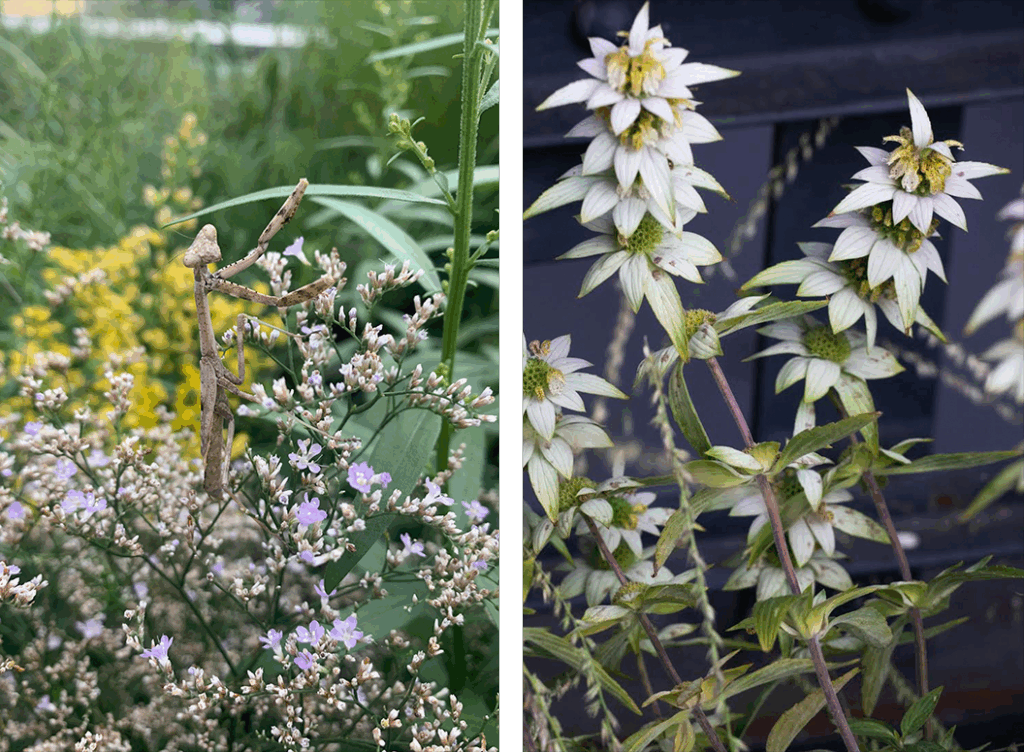
Pollinator plants & beneficial mantises
“Spotted beebalm, Monarda punctata, is a relatively new introduction to the Wildflower Field. It’s a native, short-lived perennial that blooms from May to July. It’s a wonderful pollinator plant that attracts native and non-native bees, butterflies, and predatory wasps. We’ve also seen an increase in the native praying mantis, the Carolina mantid, Stagmomantis carolina, in my zone.”
Gretchen Tassone
Wildflower Field
27th – 30th Streets
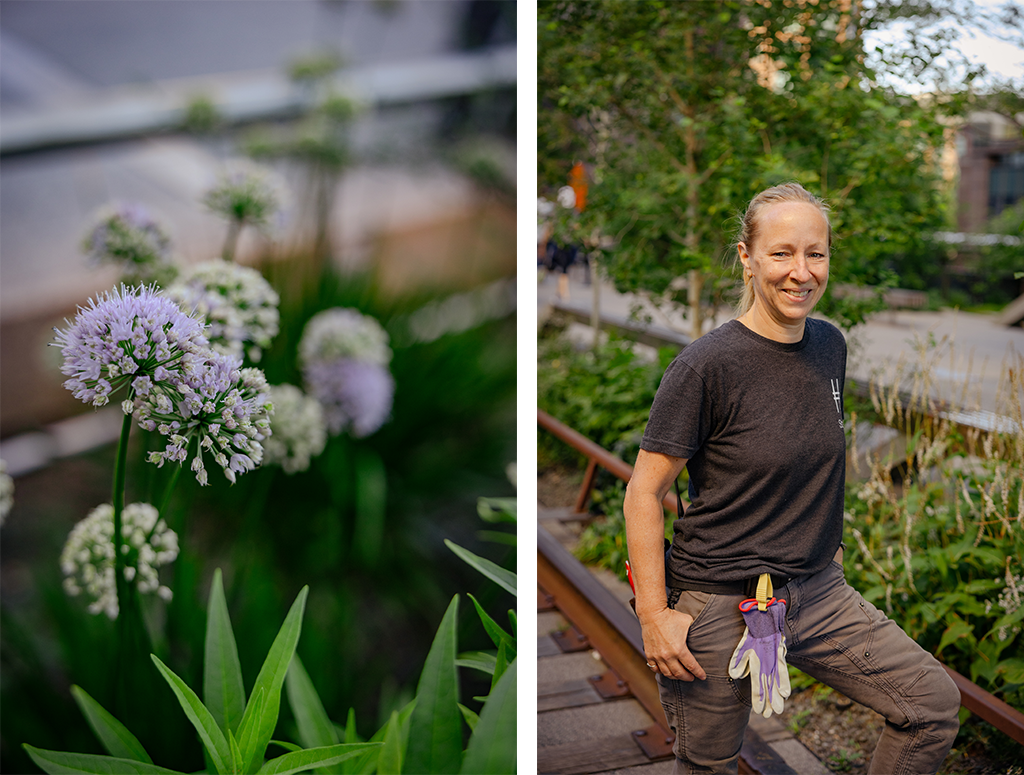
Recommendations from Piet
“The new plantings in my sections were inspired by recommendations from garden designer Piet Oudolf during his last visit to the High Line. I’ve added more pine trees to the walkway at 30th Street. These trees have proven to be resilient, capable of withstanding the wind tunnels in this section of the park. Additionally, I have added Allium ‘Summer Beauty’ at 30th Street.”
Lisa Kellman
Eastern Rail Yards, Crossroads & Pershing Square Beams
30th Street, between 10th and 11th Avenues
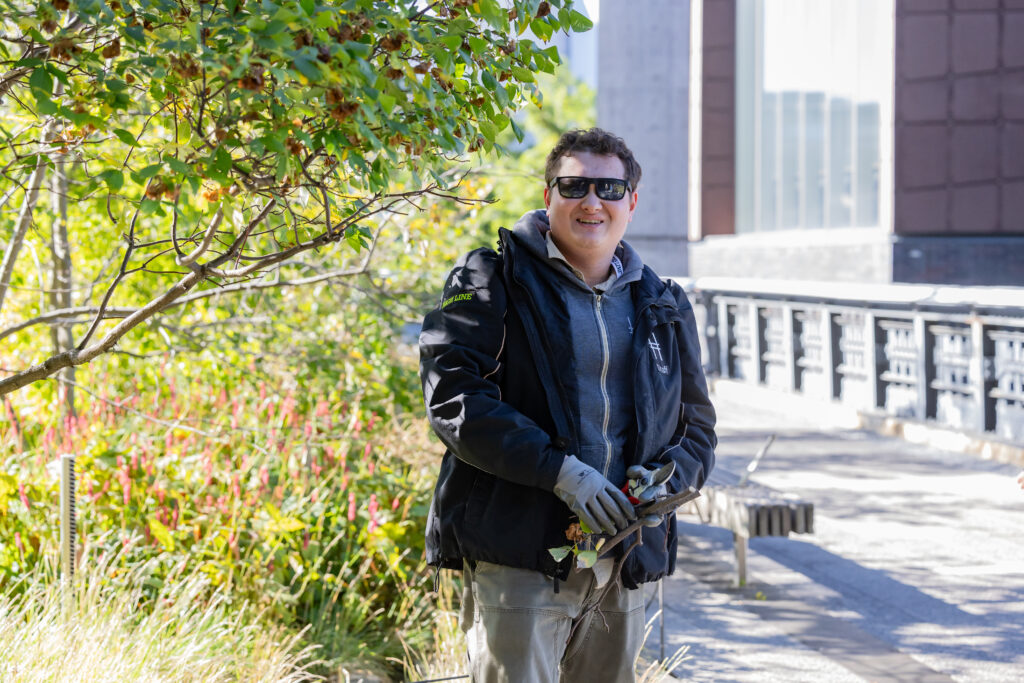
New color & texture on the Spur
“I’ve introduced several new plants in the garden on the Spur, chosen to provide greater seasonal interest. Azure Rush is a hardy geranium that produces a rich blue flower color. Skyracer moor grass, Molinia arundinacea ‘Skyracer,’ was chosen for its height and its airy texture—the seed heads move in the wind are so thin they are almost transparent. Adoration Culver’s root, Veronicastrum virginicum ‘Adoration,’ was selected for its flower color and upright form.”
Luka Mclean
Coach Passage and the Spur
30th Street, close to 10th Avenue
Photography: Liz Devine | Liz Ligon