Due to heavy rain in the forecast, tonight’s High Line Tour: From Freight to Flowers has been canceled. We look forward to seeing you on a future tour!


your inbox
Sign up for the High Line newsletter for the latest updates, stories, events & more.
Derek Fordjour
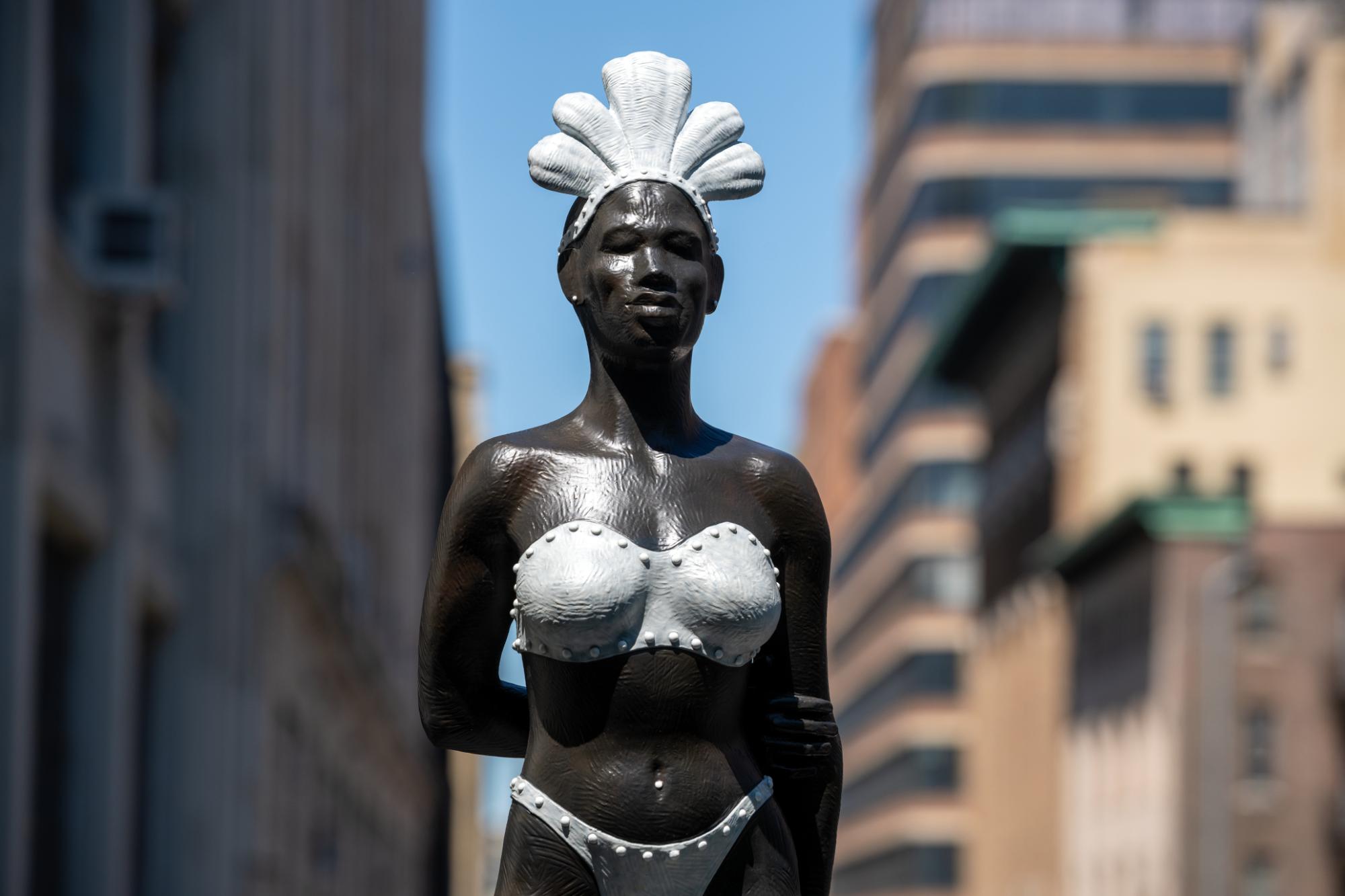
Archetype I: Seduction; Archetype II: Servility; and Archetype III: Resilience
On the High Line between 25th and 26th Streets
Derek Fordjour’s practice spans painting, sculpture, installation, and performance to explore the intertwined histories of power, labor, representation, and the Black experience. Best known for his vibrant paintings layered with everyday materials such as cardboard, newspaper, aluminum foil, and glitter, Fordjour pockmarks and reveals textured surfaces that embody material history and repurpose practices. Through this collage-based process, he constructs exuberant yet introspective scenes often populated by athletes, musicians, and other performers, archetypes of spectacle and commerce. Figures are often depicted mid-action, highlighting both the vitality and vulnerability of the human form. Fordjour places these figures within lively scenes where their interactions, gestures, and spatial relationships underscore his exploration of race and systemic inequity, juxtaposing individual achievement against the broader structural challenges historically faced by Black individuals and communities. His work moves between celebration and critique, evoking emotions that range from joy to melancholy, where effortless grace and visible exertion coexist and reveal the tension between personal striving and collective expectation.
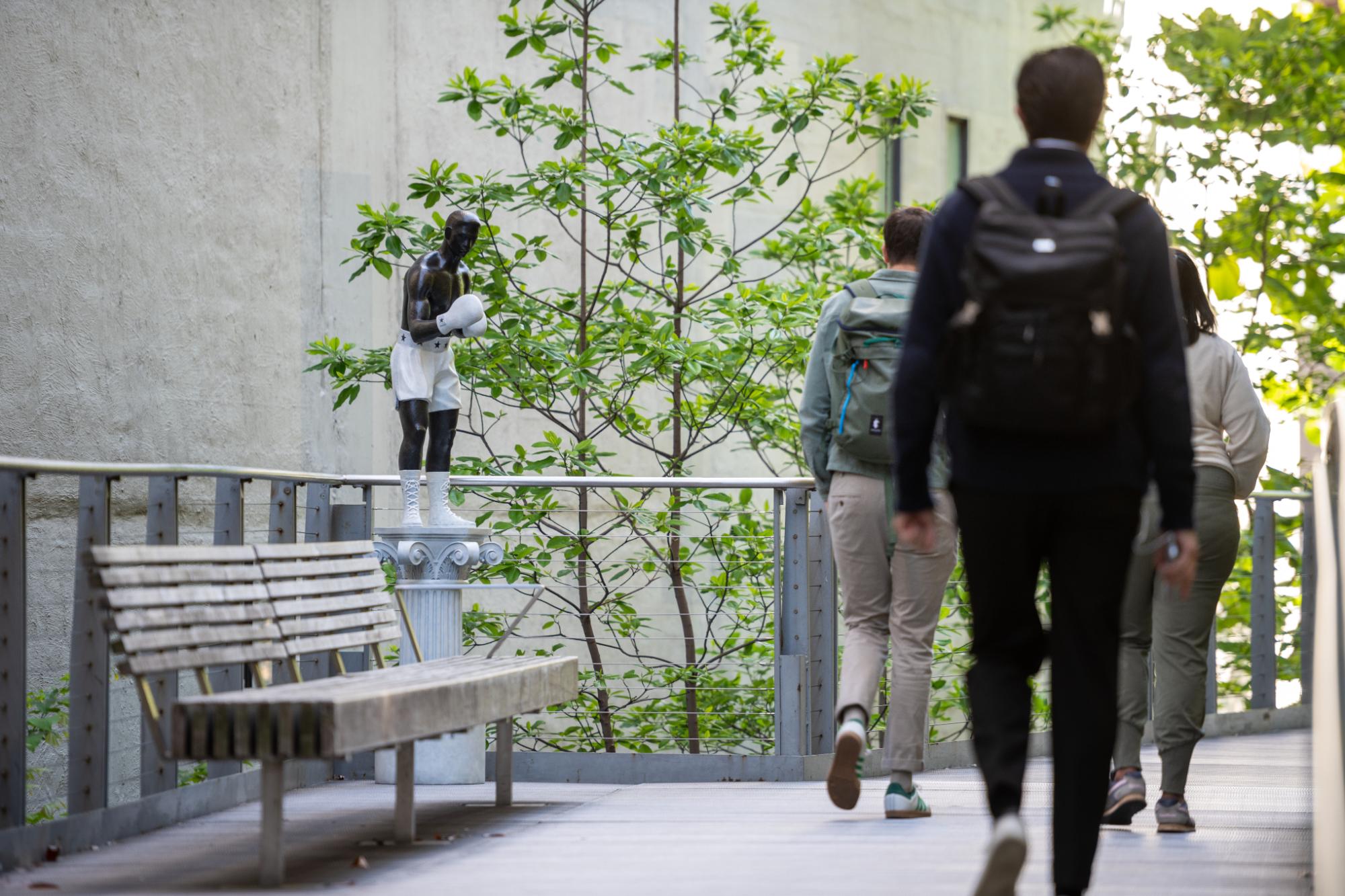
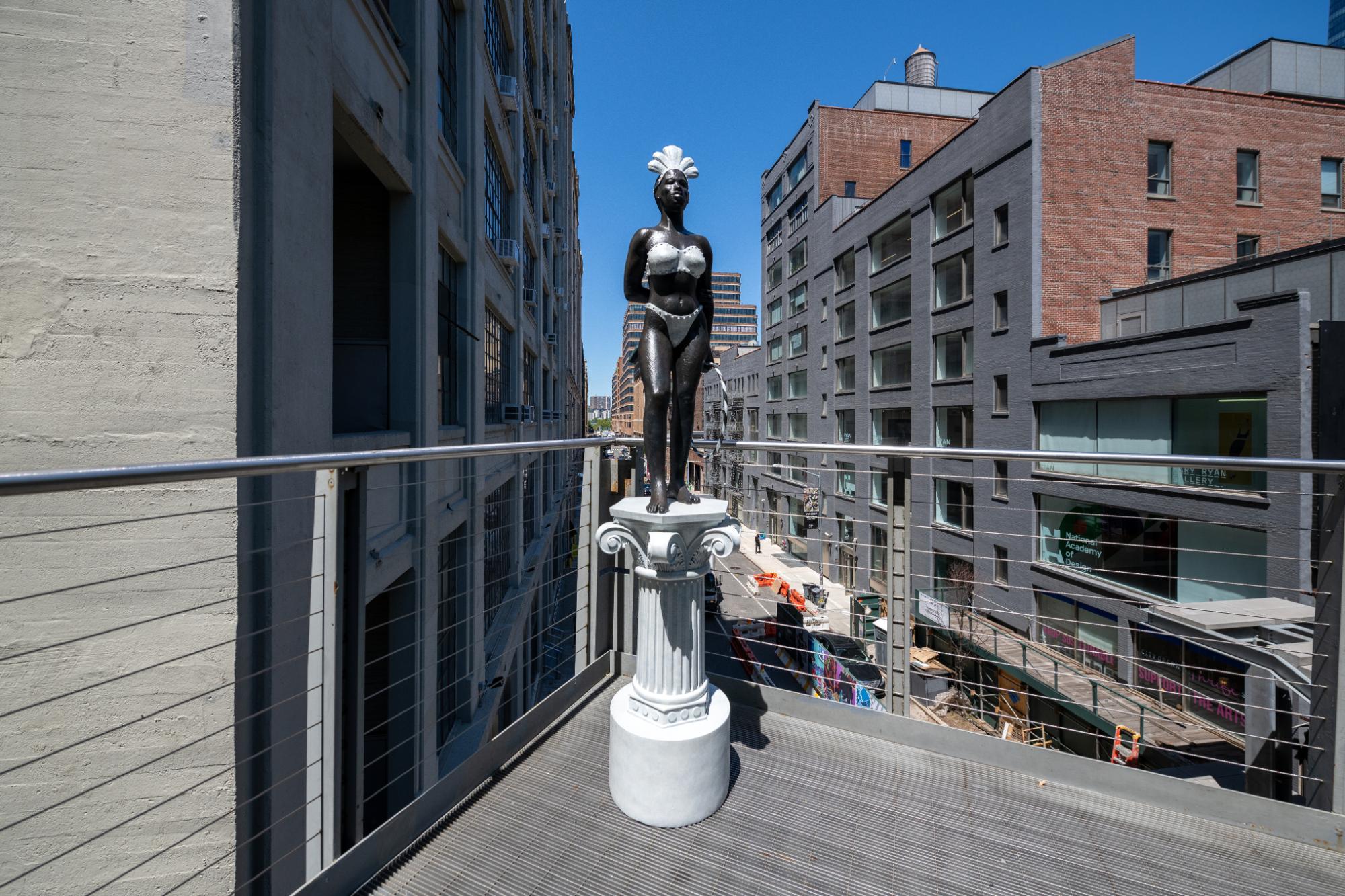
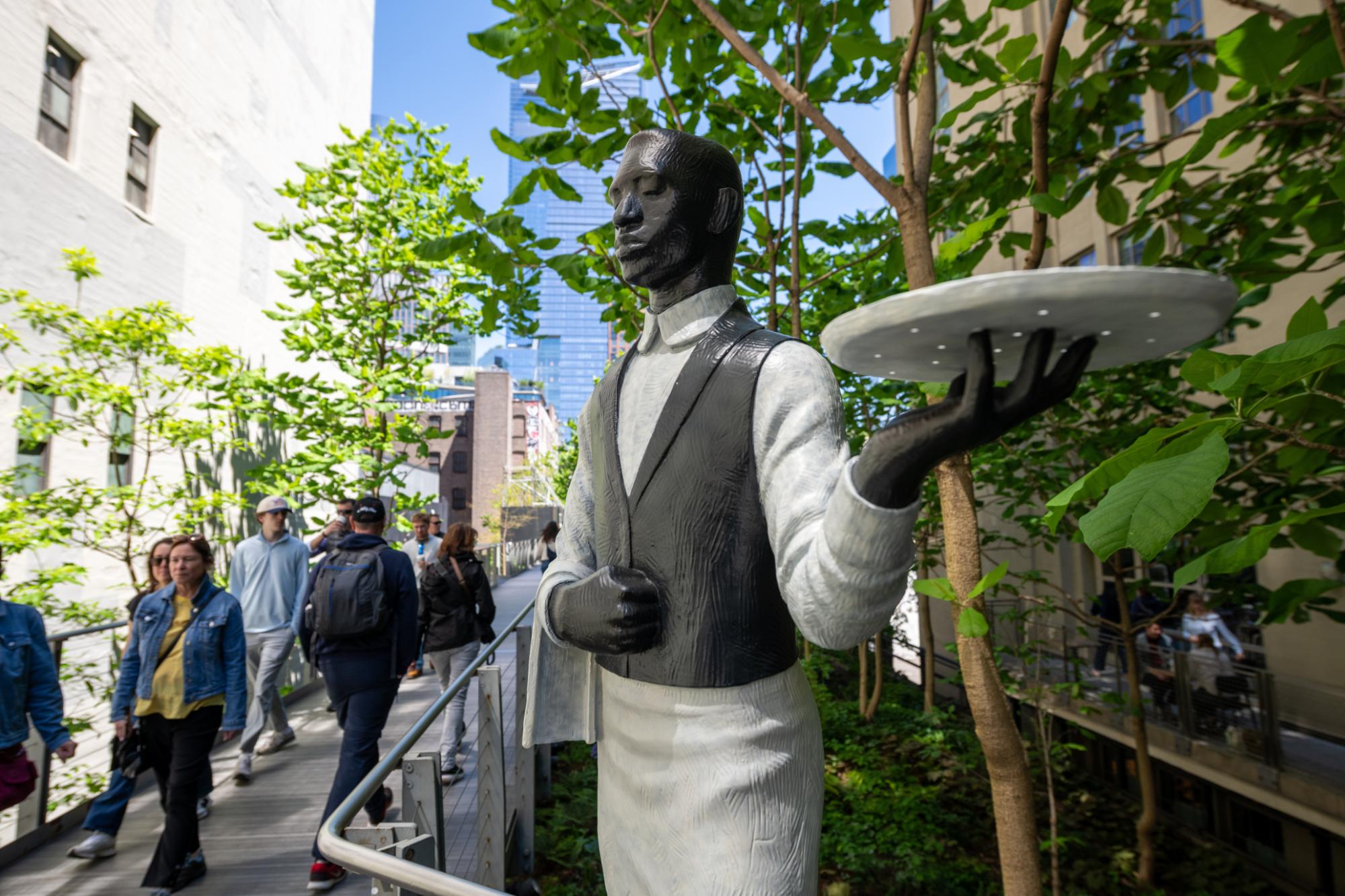
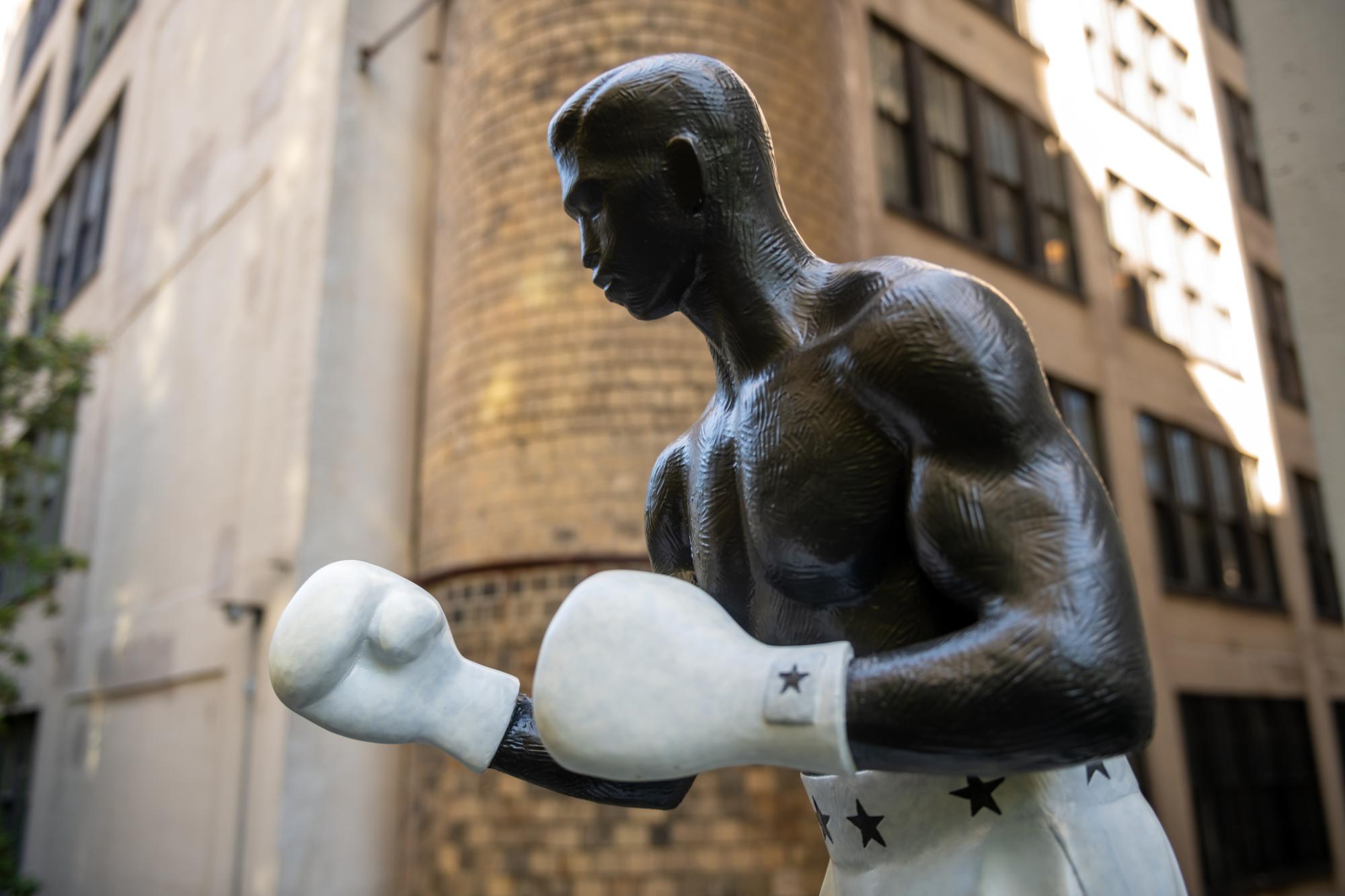
For the High Line, Fordjour presents ARCHETYPES, three painted bronze sculptures depicting Black figures—a boxer, a waiter, and a burlesque dancer—alongside his High Line Commission mural, Backbreaker Double. These works showcase individual athletes, workers, and performers shaped by distinct yet interconnected entertainment and service economies. In the absence of generational wealth, Fordjour memorializes the historic practice of utilizing one’s own body for social advancement. More than the specific professions, the associations with each role become interchangeable. How does a black waiter entertain? Who does a black performer serve? All three occupy roles that vacillate between empowerment and exploitation, while remaining deeply entangled with systems of commerce, consumption, and control.
Artist bio
Derek Fordjour (b. 1974, Memphis, Tennessee) lives and works in New York, New York. Fordjour has presented his work in solo and group exhibitions at institutions around the world. Recent group exhibitions include Flight into Egypt: Black Artists and Ancient Egypt, 1876–Now, The Metropolitan Museum of Art, New York, New York (2024–2025); and Get in the Game: Sports, Art, Culture, San Francisco Museum of Modern Art, San Francisco, California (2024). He is the recipient of the 2025 Gordon Parks Foundation Artist Fellowship, the 2023 St. Jude Children’s Research Hospital Spirit of the Dream Award, and has previously served as a Visiting Critic at Yale and Columbia Universities. In addition to the High Line, he has received public commissions for MTA’s Arts & Design, New York City, New York (2018); MOCA Grand Avenue, Los Angeles, California (2022); and at Manning Family Children’s Hospital, New Orleans, Louisiana (2026). He is the founder of Contemporary Arts Memphis.
Support
Lead support for High Line Art comes from Amanda and Don Mullen.
Major support is provided by The Brown Foundation, Inc. of Houston and Charina Endowment Fund. Major support of High Line Art’s digital infrastructure is provided by Bloomberg Philanthropies.
Project support for Derek Fordjour’s commissions is provided by Sarah Arison. Program support for High Line Art is provided by Sarah Arison, Suzanne Deal Booth, Charlotte Ford, Joyce F. Menschel and Stardust Arts. Additional support is provided by Agnes Gund and Shane Akeroyd.
High Line Art is supported, in part, with public funds from the New York State Council on the Arts with the support of Governor Kathy Hochul and the New York State Legislature, and the New York City Department of Cultural Affairs in partnership with the New York City Council, under the leadership of Speaker Julie Menin.

Sobre esta obra
La práctica de Derek Fordjour (n. 1974, Memphis, Tennessee) abarca la pintura, la escultura, la instalación artística y el performance para explorar las historias entrelazadas entre el poder, el trabajo, la representación y la experiencia Negra. Mejor conocido por sus cuadros con capas de materiales cotidianos como el cartón, periódicos, papel de aluminio y la escarcha, Fordjour crea marcas y por medio de ellas revela superficies texturadas que encarnan la historia y las prácticas de reutilización del material. Sus obras están pobladas de atletas, artistas musicales y presentadores (arquetipos del espectáculo y del comercio) que yuxtaponen los logros individuales contra los retos estructurales más amplios enfrentados por personas y comunidades Negras. El trabajo de Fordjour se mueve entre la celebración y la crítica, provocando emociones que van desde la alegría a la melancolía, donde la gracia natural y el esfuerzo visible coexisten y revelan la tensión entre la lucha personal y la expectativa colectiva.
Para el High Line, Fordjour presenta, ARCHETYPES, tres esculturas que representan figuras negras, entre ellas figuras del boxeo, del sector de restaurantes y de bailarines de burlesca. Estas obras muestran personas impactadas por las economías de servicio y el entretenimiento, que son tan distintas y a la vez interconectadas. En bronce sólido Fordjour conmemora la práctica histórica de utilizar el cuerpo propio para alcanzar el avance social. Más allá de las profesiones específicas, las asociaciones de cada rol se convierten en algo intercambiable. ¿Cómo un mesero negro entretiene? ¿A quién le sirve una artista negra? Los tres ocupan roles que vacilan entre el empoderamiento y la explotación, mientras se mantienen profundamente enredados con los sistemas del comercio, el consumo y el control.
关于这件作品
Derek Fordjour(生于1974年,美国田纳西州孟菲斯)的创作横跨绘画、雕塑、装置与行为表演等形式,探讨权力、劳动、表征及黑人经验之间相互交织的历史。他最为知名的是以纸板、报纸、铝箔和亮粉等日常材料层层叠加而成的绘画,通过刻痕与破损,显露出富有肌理的表面,承载着材料的历史与再利用的实践。他的画面常由运动员、音乐家及其他表演者构成,这些兼具奇观与商业属性的原型人物,将个体成就与黑人个体及社群在历史上所面临的更广泛的结构性挑战并置呈现。Fordjour的作品游走于礼赞与批判之间,唤起从喜悦到忧郁的多重情感:看似毫不费力的优雅与清晰可见的力竭并存,揭示出个体奋斗与集体期待之间的张力。
在高线公园的项目中,Fordjour呈现了一组由三件雕塑构成的作品《原型》,分别描绘了三位黑人形象:一位拳击手、一名侍者与一位滑稽舞舞者。这些作品展现了在娱乐与服务经济中被塑造的个体,这些领域彼此区分,却又相互关联。通过以实心青铜铸造,Fordjour纪念了以自身身体作为社会上升工具的历史实践。比起具体职业本身,这些角色所承载的社会联想更具可互换性:一名黑人侍者如何娱乐他人?一位黑人表演者又在服务谁?三者皆处于赋权与剥削之间摇摆的角色之中,同时又深度卷入商业、消费与控制的体系。